The 2026 landscape for custom 3D printing in Singapore
As additive manufacturing evolves, Singapore has solidified its position as a regional hub for high-quality custom 3D printing Singapore and full-service 3d printing service singapore. For designers, startups and manufacturers, 2026 brings faster turnaround times, broader material portfolios and closer integration between CAD workflows and printing production. This article explains what to expect, how to choose a provider, important technologies and practical tips to reduce cost and time-to-market.
Why businesses choose custom 3D printing Singapore
Singapore’s manufacturing ecosystem offers several advantages for custom 3D printing Singapore:
- Geographic and logistical efficiency for APAC distribution.
- High standards in quality control and regulatory awareness, especially for medical and aerospace applications.
- A thriving design community that pairs creativity with engineering rigor.
- Competitive lead times owing to mature supply chains and local post-processing capabilities.
These strengths make Singapore a natural base for projects that require precision, iterative prototyping, and short production runs.
Key technologies shaping 3d printing service singapore in 2026
Understanding core technologies helps you match a service to your needs. Top options available across Singapore providers include:
- SLA (Stereolithography): High-resolution resin prints ideal for detailed prototypes, consumer product masters and jewelry patterns.
- SLS (Selective Laser Sintering): Nylon-based, structurally robust parts for functional testing, assemblies and end-use components.
- FDM (Fused Deposition Modeling): Cost-effective, fast-turnaround prototypes and large-format concepts using thermoplastics like ABS, PLA and engineered polymers.
- DMLS/SLM (metal): For aerospace, medical and high-strength industrial parts, metal printing offers complex geometries not achievable with traditional machining.
- Multi-material and color printing: Useful for functional prototypes that need multiple material properties or for presentation models.
3d printing service singapore providers typically combine these processes with in-house post-processing (sanding, painting, plating) to produce finished products that are ready for markets or client presentations.
Materials and finishes: pick what matters most
Selecting the right material affects strength, appearance, biocompatibility, and cost. Popular choices in Singapore include:
- Engineering-grade nylons (PA12, PA11) — durables for assemblies and moving parts.
- Resins (standard, tough, flexible, castable) — excellent surface finish and fine details.
- Photopolymers for high-detail display models and molds.
- Metal (stainless steel, titanium, aluminium) — for load-bearing parts or premium products.
Finishing options range from simple vapor smoothing and dyeing to priming and automotive-grade painting. When evaluating a 3d printing service singapore, confirm their post-processing capabilities and in-house quality checks to avoid surprises.
Typical applications and real-world examples
Custom 3D printing Singapore supports a broad set of applications:
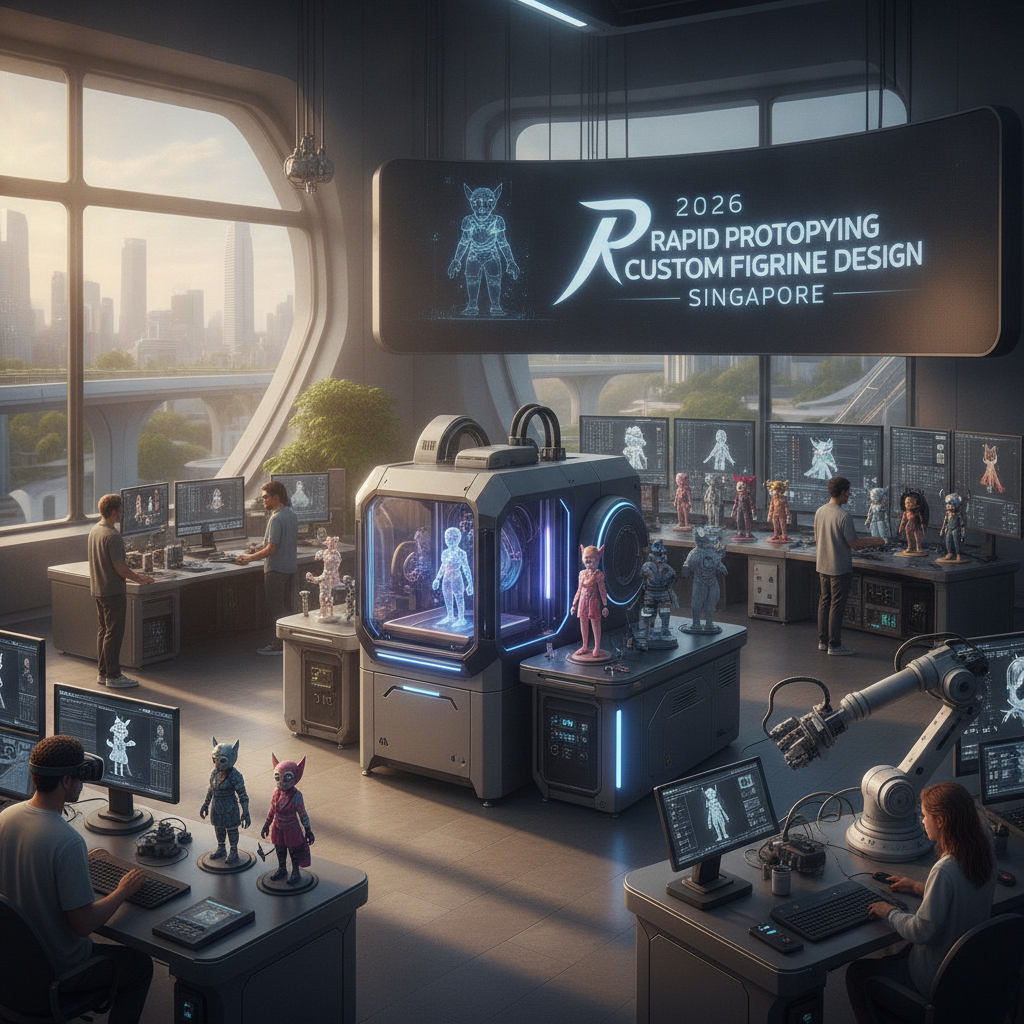
- Rapid prototyping: iterate designs quickly to validate form, fit and function. For projects focused on iteration speed, see dedicated providers offering custom 3D printing Singapore for rapid prototyping.
- Product development & lifestyle goods: designers producing small runs of lifestyle products benefit from precise detailing and premium finishing. Explore approaches for lifestyle items at Singapore 3D printing for lifestyle product design.
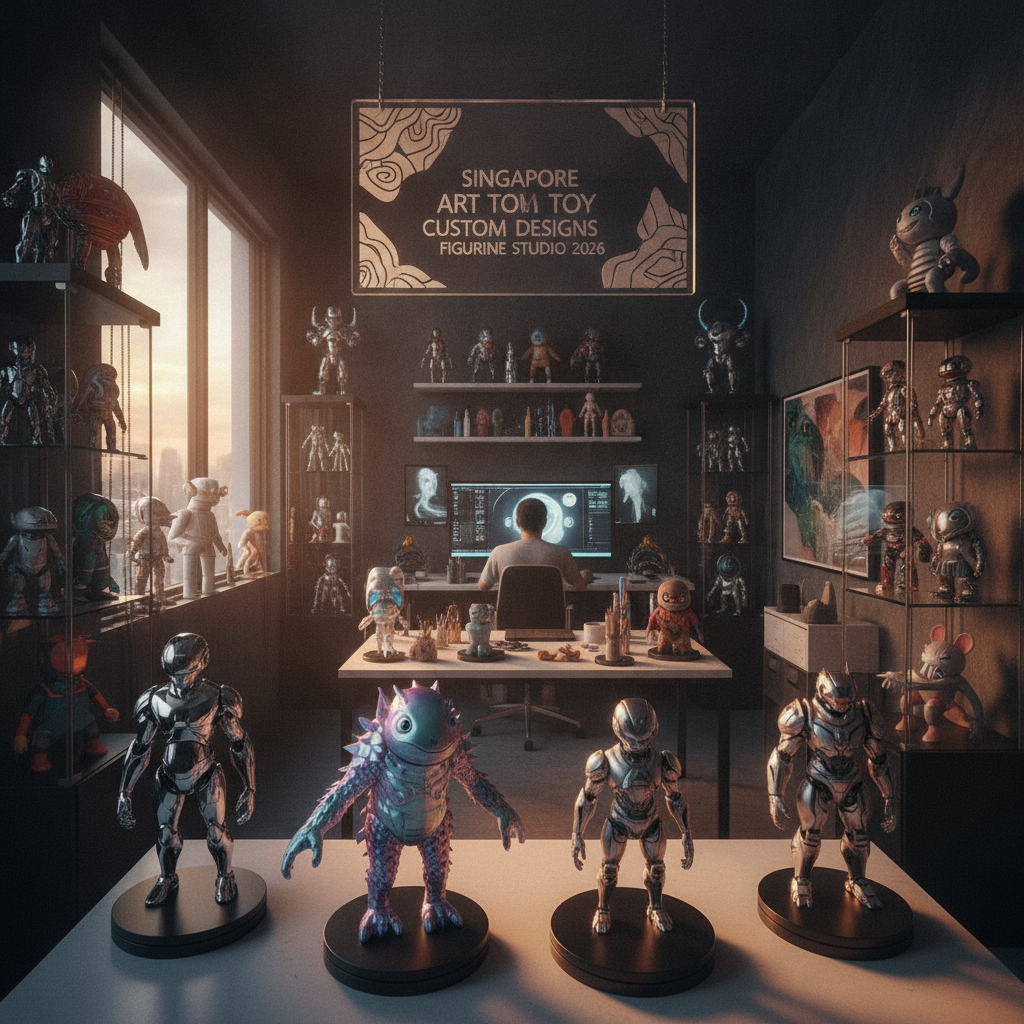
- Collectibles and art toys: limited editions and collectible art toys leverage high-detail resin prints and hand-finishing; example workflows are highlighted in the limited-edition art toys guide.
- Medical devices and dental: biocompatible resins and metal printing provide custom implants, guides and prosthetics under strict QC.
- Industrial parts and jigs: durable polymers and metal components help reduce tooling costs and shorten assembly lines.
The end-to-end service: from CAD file to finished part
A professional 3d printing service singapore will support the full workflow:
- Design review and DFM (design for manufacturability): Experienced services flag thin walls, trapped volumes, and unsupported features.
- CAD optimization and slicing: Proper orientation and support strategies reduce material use and improve surface quality.
- Printing and monitoring: Industrial printers with build monitoring and controlled environments reduce failure rates.
- Post-processing: Support removal, curing, sanding, priming, painting, and assembly — all crucial for product-grade outputs.
- Quality assurance: Dimensional inspection, mechanical testing and traceable process documentation ensure repeatability.
Many vendors pair printing with CAD support and engineering consultation — if you need design refinement, look for firms that advertise 3D printing service Singapore and CAD modeling.
Cost, lead time and how to optimize both
Costs depend on machine type, material, post-processing, and labour. Typical considerations:
- Choose the technology that aligns with part function: SLA for visual prototypes; SLS for functional parts; metal for structural components.
- Batch parts within the same build volume to amortize setup costs.
- Simplify geometry where possible; hollowing and lattice structures cut material and print time.
- Consolidate assemblies into single printed parts to reduce post-assembly labour.
Lead times in Singapore can range from 24–72 hours for simple FDM parts, to 1–3 weeks for complex, post-processed metal or painted assemblies. Providers that combine CAD and printing often reduce iteration cycles — for best practices, review how the best CAD modeling and rapid 3D prototyping workflows are structured.
Sustainability and materials recycling trends
Sustainability is increasingly influencing choices in 2026:
- Recyclable nylons and reclaimed powders in SLS minimize waste.
- Bio-based resins and lower-energy processes reduce the environmental footprint.
- Localized production (printing close to the market) reduces transport emissions and supports on-demand inventory strategies.
When evaluating a 3d printing service singapore, ask about material traceability, recycling programs, and the energy profile of their production equipment.
Selecting the right provider in Singapore: a checklist
Use the following checklist to compare vendors:
- Technology coverage: Do they offer the specific printing tech and materials you need?
- Design support: Is CAD modeling and DFM advice part of the service?
- Post-processing & finishing: Are the finishing options suitable for your brand standards?
- Quality systems: Are there inspection reports, certifications, or test data?
- Turnaround & capacity: Will they meet your timeline for prototyping or small-batch production?
- Case studies & references: Look for projects similar to yours (e.g., lifestyle products or premium collectibles).
For product designers seeking a combination of modeling and production, integrated services that emphasize CAD and rapid iteration provide a measurable speed advantage.
Pricing models and contracts
Common pricing models include per-part quoting, monthly retainer for recurring production, or project pricing for development engagements. Watch for the following contract elements:
- Revision policies: How many design iterations are included?
- Intellectual property protection: NDAs and secure file handling.
- Warranty and defect remediation: Who covers issues from material flaws or process errors?
Transparent quoting and clear SLA terms protect both parties during development and production phases.
2026 trends to watch in Singapore’s 3D printing scene
- Hybrid manufacturing: Combining CNC and additive methods for high-precision parts.
- Digitized supply chains: Real-time quoting, online build previews and automated nesting reduce lead times.
- Increased adoption of metal additive manufacturing for small-batch production in aerospace and medtech.
- Customization at scale: Personalised products using parametric design and print-on-demand.
These trends indicate that selecting a partner with both engineering depth and production scalability will be increasingly valuable.
Practical tips before you send files
- Export clean STL or STEP files and remove non-manifold geometry.
- Annotate critical dimensions and tolerance zones.
- Provide intended use and required mechanical properties so the provider can recommend materials and processes.
- Ask for a sample print or prototype run to validate finish and fit before committing to larger production.
For teams looking to outsource full project development, services that combine design and printing reduce back-and-forth and produce better final results.
Conclusion
In 2026, custom 3D printing Singapore and 3d printing service singapore are at a maturity point where speed, material choice and integrated CAD support define competitive advantage. Whether you are developing a consumer lifestyle product, producing limited-run collectibles, or validating functional prototypes, choosing a provider with strong engineering support, robust post-processing and a clear sustainability approach will save time and reduce risk. For focused workflows on prototyping, lifestyle product design, collectibles or CAD-integrated production, tap providers who advertise proven processes and case studies that align with your market needs.
Begin with a clear brief, prioritize material and finish requirements, and partner with a service that offers design collaboration and traceable quality for dependable results.