Why custom 3D printing matters for lifestyle product design in Singapore
Singapore’s design scene has matured from boutique studios to scalable lifestyle brands, and the way products are conceived and brought to market has shifted accordingly. Custom 3D printing Singapore is a practical toolkit for designers, entrepreneurs, and brands that need speed, flexibility and cost-effective small-batch production. For lifestyle product design in Singapore, additive manufacturing isn’t just a way to make a part — it’s an enabler of experimentation, personalization, and faster validation.
This article explores the practical advantages, workflows, material choices, finishing strategies and local trends that make 3D printing essential for contemporary lifestyle product design.
Key advantages for lifestyle brands
- Rapid prototyping: Iterations that used to take days or weeks can be produced in hours, allowing faster validation of form, ergonomics and functionality.
- Cost-effective small-batch runs: Additive manufacturing reduces the need for expensive tooling, making limited editions and short runs commercially viable.
- Personalization and customization: From personalized phone accessories to bespoke homeware, 3D printing supports variable geometry and on-demand customization without extra tooling costs.
- Complexity at no extra cost: Organic shapes, internal lattices and integrated assemblies that are difficult or impossible with traditional methods are straightforward with 3D printing.
- Local production and shorter lead times: Singapore-based services enable tight feedback loops, fast sampling, and easier IP management.
These benefits accelerate time-to-market and open creative possibilities for lifestyle product design in Singapore, from art toys to functional home accessories.
How design workflows change with custom 3D printing
A typical product development process adapted for 3D printing looks like this:
- Research & concept: Market insights, mood boards and target-user scenarios.
- CAD & digital prototyping: Parametric models that can be easily adjusted for multiple sizes or variants.
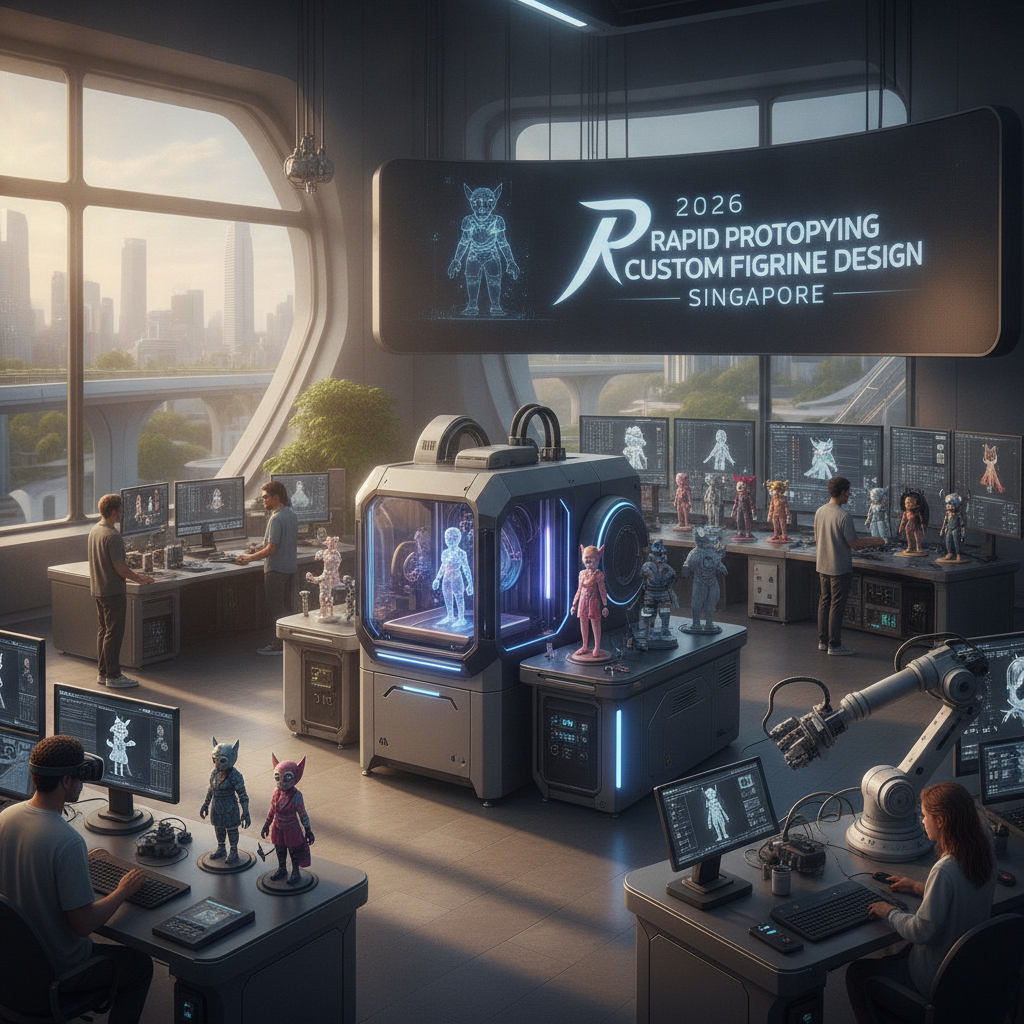
- Rapid prototyping: Print, test, refine — repeat quickly to validate ergonomics and assembly.
- Pre-production finishing & testing: Surface treatments, painting, and mechanical testing.
- Small-batch production or hybrid manufacturing: Combine printed parts with CNC, injection molded components or off-the-shelf electronics.
For designers focused on lifestyle product design Singapore offers a tight ecosystem of makerspace labs, prototyping houses and specialized service providers that can execute the full loop from CAD to finished sample.
Choosing the right technology and materials
Not all 3D printing is the same. For lifestyle products, technology choice depends on end-use, aesthetics and durability.
-
FDM (Fused Deposition Modeling): Affordable and excellent for quick functional prototypes. Use when form and fit are the priority. Good for durable parts in PLA, PETG, ABS and flexible TPU. Fast FDM services accelerate iteration cycles and are ideal for low-cost prototyping and durable consumer goods. See examples of fast FDM 3D printing for rapid prototyping in local service offerings.
-
SLA/DLP (Resin printing): High-detail surface finish ideal for art toys, jewelry prototypes and finely detailed consumer accessories. Resin prints require post-curing and careful handling but deliver crisp details and smooth surfaces.
-
SLS (Selective Laser Sintering): Excellent for functional parts with complex geometry and good mechanical properties. Strong nylon parts suitable for wearables, hinges and living hinges.
-
Multi-material and composite printing: Enables integrated soft-touch features (TPU) with rigid structural cores. This is useful for lifestyle items that need both comfort and strength.
Selecting the right material is as important as choosing the technology. Designers should consider strength, UV resistance, finishability, colorability, and tactile feel when specifying materials for lifestyle applications.
Design for additive manufacturing (DfAM) — practical tips
To get the most from custom 3D printing Singapore processes, follow these DfAM guidelines:
- Optimize orientation: Print orientation affects surface finish, strength and support needs. Position parts to minimize visible layer lines on critical surfaces.
- Minimize supports when possible: Design self-supporting features or add sacrificial geometry to simplify post-processing.
- Consider tolerances: Use realistic clearance values for snap-fits and press-fits depending on the chosen process and material.
- Use fillets and chamfers: Small radii reduce stress concentrations and improve printability.
- Leverage internal lattices: Reduce weight and save material without compromising structural integrity.
- Plan for post-processing: Account for sanding, priming, painting or chemical smoothing in the timeline and material selection.
These adjustments reduce iteration cycles and lower production costs while maintaining product quality.
Finishing and surface quality — from prototype to product
A printed part is rarely market-ready straight off the build plate. Finishing transforms prototypes into consumer-grade products:
- Mechanical finishing: Sanding, filling and priming smooth layer lines for painted surfaces.
- Chemical smoothing: Vapor smoothing for ABS or specialized resin processes can produce glossy, injection-mold-like finishes.
- Painting and coating: Automotive-grade paints, powder coating for compatible substrates, and UV-stable lacquers increase durability and aesthetics.
- Metallization and plating: For premium touches, electro-less plating or metal spray finishes can imitate real metal surfaces.
- Assembly and integration: Printed parts can be combined with electronics, textiles and metal fittings to create complete lifestyle products.
Local service providers frequently bundle finishing services, so designers in Singapore can obtain market-ready prototypes and short-run products without managing multiple vendors.
Sustainability and local manufacturing benefits
Sustainability is a growing priority in lifestyle product design. 3D printing can reduce waste compared with subtractive methods, and localized production cuts transport emissions and overproduction. Designers should prioritize recyclable materials (e.g., certain nylons and recyclable PLA blends), and design for repairability and modularity so products have longer lifecycles.
Furthermore, Singapore’s compact geography and manufacturing ecosystem make it practical to maintain shorter supply chains: faster feedback, reduced inventory and closer collaboration between designers and print houses.
Trends shaping lifestyle product design in Singapore (2026 perspective)
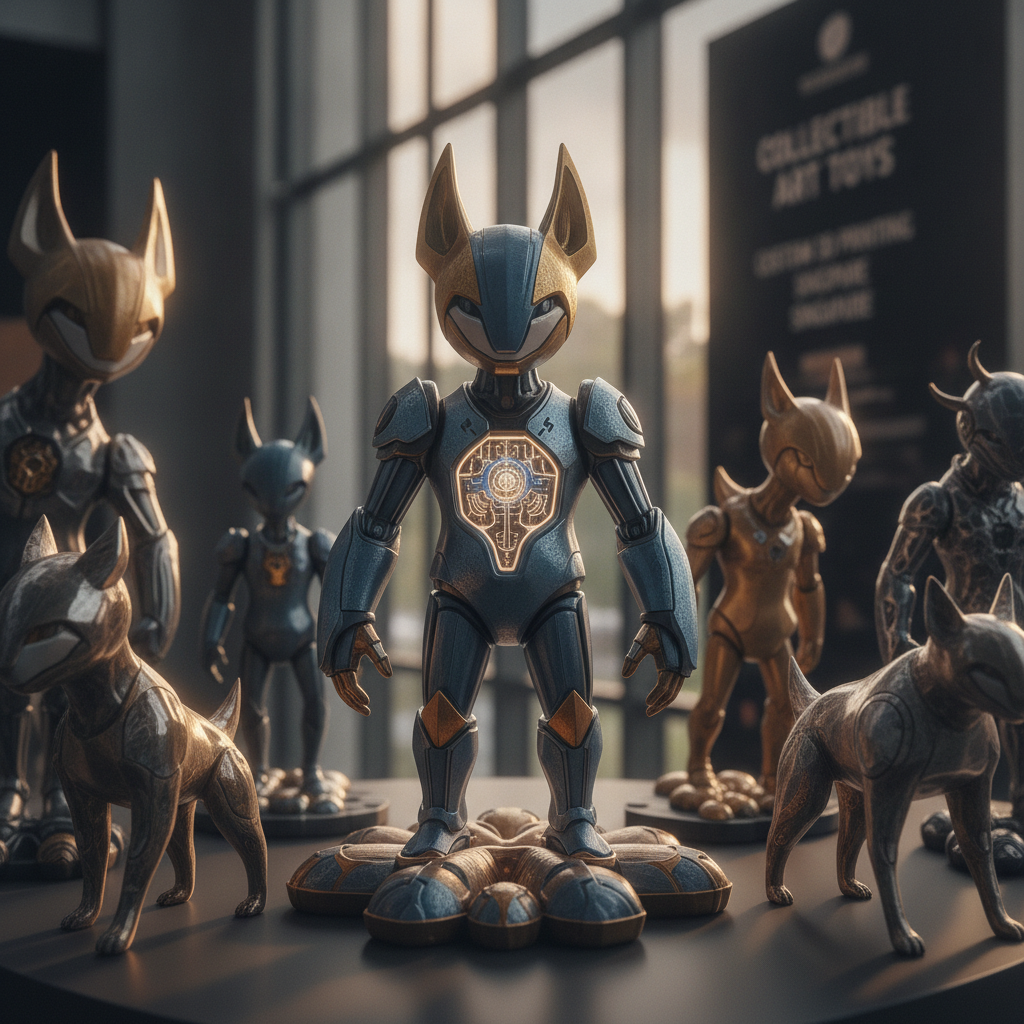
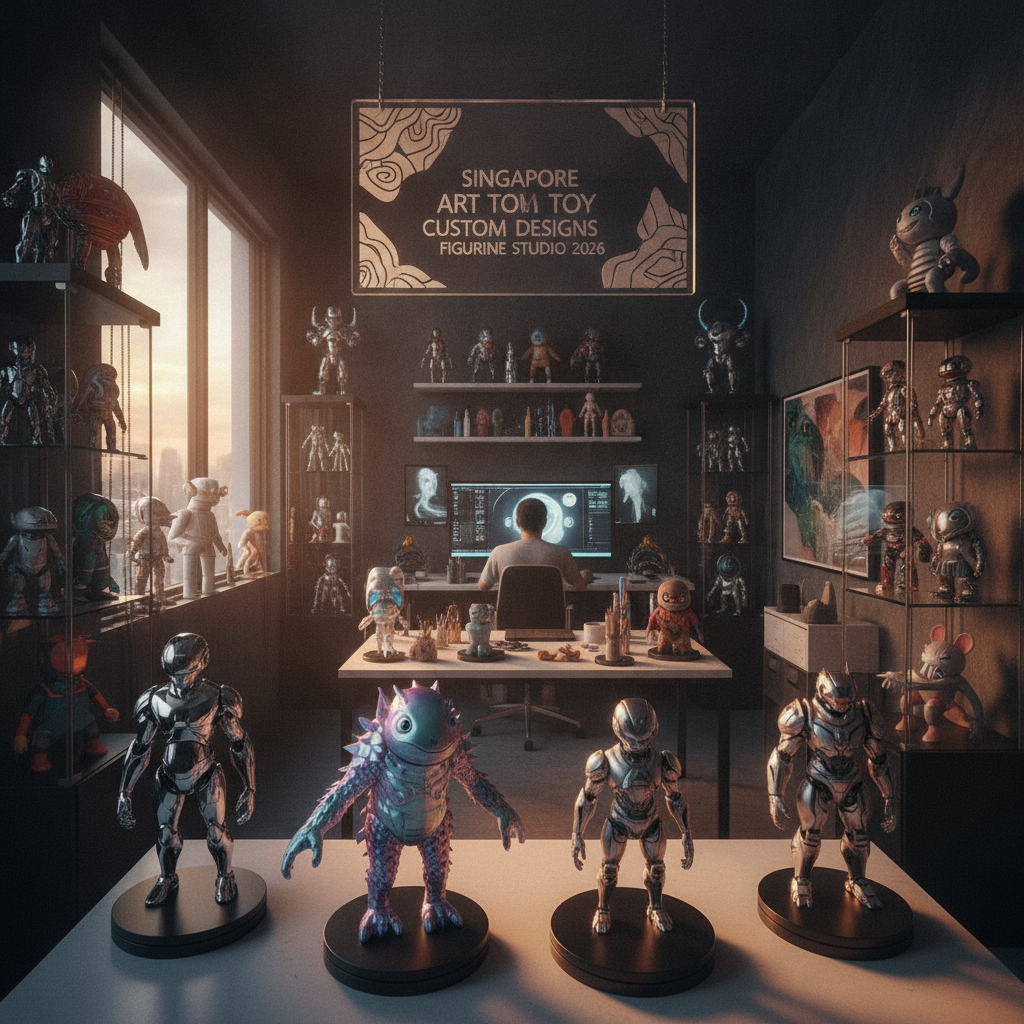
- Limited-edition runs and collectibles: Designers are releasing small series and artist collaborations that rely on custom 3D printing for uniqueness and quality. Explore trends in art toys and designer collectibles to see how limited production runs create brand differentiation.
- NFTs and physical collectibles crossover: Digital provenance paired with physical, high-quality printed models is a rising trend where CAD-to-collectible workflows are crucial.
- Hybrid manufacturing: Brands combine 3D printed components with traditional processes for cost optimization and performance.
- Personalization at scale: Mass customization platforms allow customers to tweak colors, textures and dimensions with a local factory producing short runs quickly.
- Sustainable materials adoption: New plant-based resins and recyclable thermoplastics increase the green credentials of 3D-printed lifestyle goods.
These trends are visible in local portfolios and exhibitions, reflecting how lifestyle product design Singapore is evolving with digital manufacturing.
Practical case examples
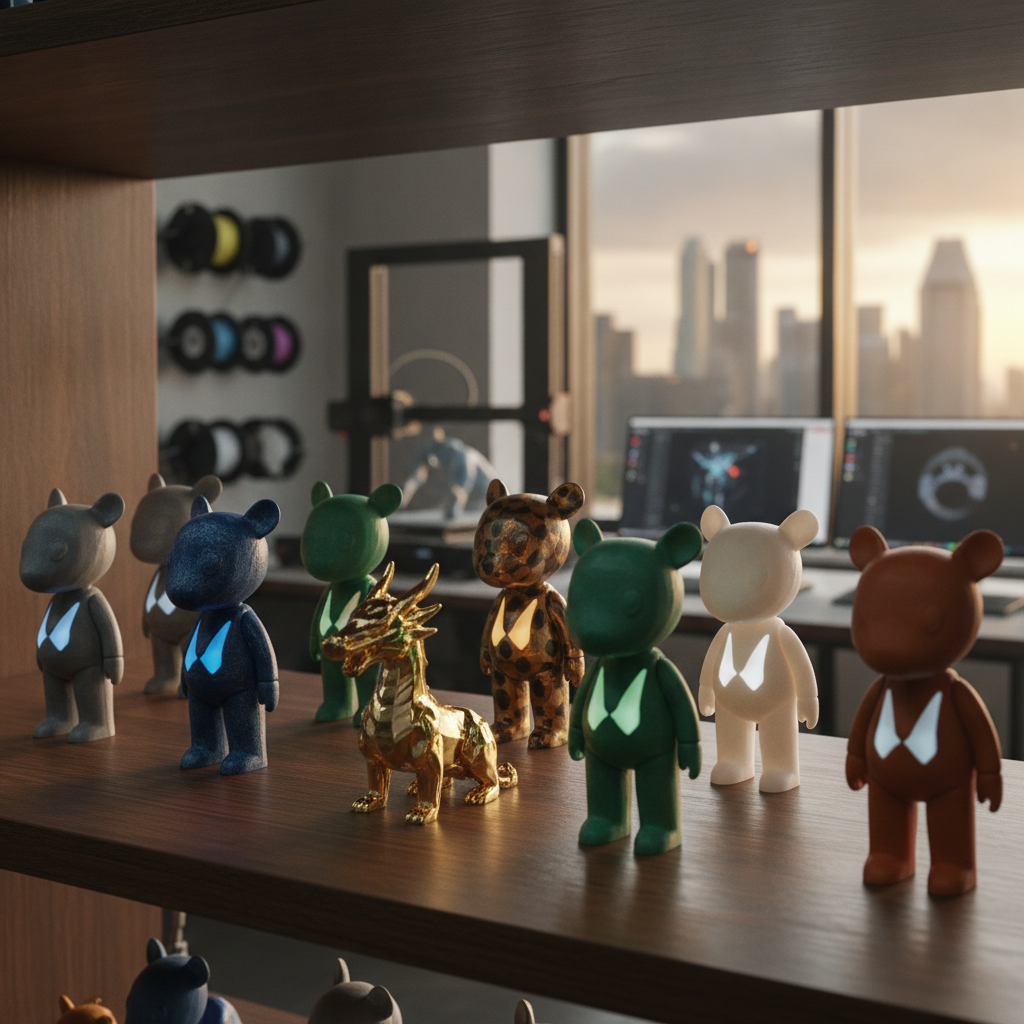
- Art toys and collectible figurines: High-detail resin prints with custom painting are used to produce limited-run toys. Designers often use small-batch printing to test market interest before scaling.
- Wearable accessories: Flexible TPU components combined with rigid cores offer comfortable, durable consumer wearables produced locally for rapid turnaround.
- Homeware and personal care: Customized grips, modular planters and bespoke kitchen tools take advantage of small-batch production and unique geometries.
Local studios and shops provide turnkey solutions — from CAD adjustments and prototyping to painting and packaging — that let creators focus on design and branding.
Choosing a local partner and what to expect
When selecting a 3D printing partner in Singapore, evaluate these factors:
- Technology breadth: A provider offering FDM, SLA and SLS gives flexibility across form and function.
- Turnaround and communication: Local partners should support rapid iterations and clear production timelines.
- Finish and post-processing capabilities: Look for sandblasting, painting, plating and assembly services if you need product-ready parts.
- Material expertise and testing: Ensure the partner can advise on mechanical properties, UV resistance and long-term performance.
- Case studies and references: Samples of past lifestyle product projects demonstrate capability.
For designers focusing on fast iterations, explore rapid FDM services for cost-effective testing and higher-resolution resin processes for presentation-ready prototypes.
Practical checklist before sending files for printing
- Confirm the file format: Most providers accept STL or STEP. For parametric changes, share native CAD files.
- Check wall thickness and minimum feature size: Ensure critical features meet the process limits.
- Set tolerances and assembly clearances: Provide dimensioned drawings where fit is critical.
- Specify material and finish: Communicate UV, wear and color requirements.
- Label parts and revisions: Use a consistent naming convention and version control for quick iterations.
A disciplined handoff reduces back-and-forth and speeds time-to-sample.
Closing notes
Custom 3D printing empowers Singapore’s lifestyle product designers to iterate faster, test ideas with real prototypes and offer personalized, limited-run products without the burden of expensive tooling. By understanding technology choices, DfAM principles and finishing workflows, designers and brands can transform concepts into tactile, market-ready products.
For hands-on prototyping, consider local fast FDM services for functional iterations, high-resolution resin printing for detailed presentation pieces, and full-service partners that manage finishing and small-batch production. Learn more about specific service capabilities and examples of art toys, limited-edition releases and rapid prototyping to align production strategy with your design ambitions.
Explore local providers and technical resources to bring your next lifestyle product to life with confidence and speed.
fast FDM 3D printing
custom 3D printing Singapore
art toys trends
limited edition art toys CAD modeling
limited edition art toys 3D printing service