

In 2026, Singapore’s design and manufacturing ecosystem is sharply focused on agility, customisation and sustainability. For entrepreneurs, designers and boutique brands delivering lifestyle products—home accessories, wearables, small furniture, personal-care aids—FDM (Fused Deposition Modeling) has matured into a pragmatic, cost-effective pathway from concept to customer.
FDM 3D printing Singapore services now offer finer layer resolution, wider material choice and more consistent post-processing than earlier generations. That evolution makes FDM not just a prototyping tool but a viable production method for limited runs and bespoke pieces. For anyone involved in lifestyle product design Singapore, this shift unlocks new product strategies: rapid iterations, personalised aesthetics, and on-demand inventory that reduces waste.
FDM is prized for speed and affordability. The technique extrudes thermoplastic filament layer by layer, enabling quick turnaround and low tooling costs compared with injection molding. For lifestyle brands in Singapore aiming for limited editions or seasonal lines, FDM lets designers iterate designs in days rather than months.
Designers can also leverage FDM for:
If you’re evaluating partners or services, search for providers with proven post-processing workflows and expertise in fdm 3d printing singapore. That combination reduces visible layer lines, improves mechanical performance, and expands the look and feel options available to lifestyle products.
Material choice is central to product viability. PLA remains popular for concept models and decorative items thanks to its printability and colour range, while PETG and ABS offer better durability and heat resistance for functional lifestyle products like kitchen tools or wearable accessories. Newer engineering filaments—nylon blends, TPU elastomers and fibre-reinforced options—allow flexible parts, higher strength, and surface finishes that mimic traditional materials.
Design choices should anticipate FDM specifics:
Post-processing is where FDM products achieve boutique quality. Techniques such as sanding, solvent smoothing, primer and paint, chemical vapor smoothing for ABS, and epoxy coating can transform a functional print into a consumer-ready piece. For guidance on integrating CAD and refinement, consider exploring services specialised in lifestyle product design singapore.
A typical product development timeline using FDM for lifestyle items in Singapore follows three phases:
Many Singaporean studios now combine automated print farms with skilled finishing teams to maintain consistency across small runs. This hybrid approach supports limited-edition launches and direct-to-consumer models common in lifestyle product markets. For studios that specialise in bridging concept to collectible, see examples of lifestyle product design singapore workflows.
Sustainability is a major trend shaping lifestyle product design Singapore. FDM contributes positively when applied with circular design principles:
Businesses pairing FDM production with local manufacturing in Singapore also cut shipping emissions and enable closed-loop returns. When evaluating suppliers, prioritise those that document material sourcing, recycling programs and waste management practices. Services with transparent sustainability policies are increasingly available—an example of a focused offering can be found via fdm 3d printing singapore.
Several trends are converging around FDM and lifestyle design:
These trends accelerate the value chain for small brands and allow Singapore-based designers to compete globally from a local production base.
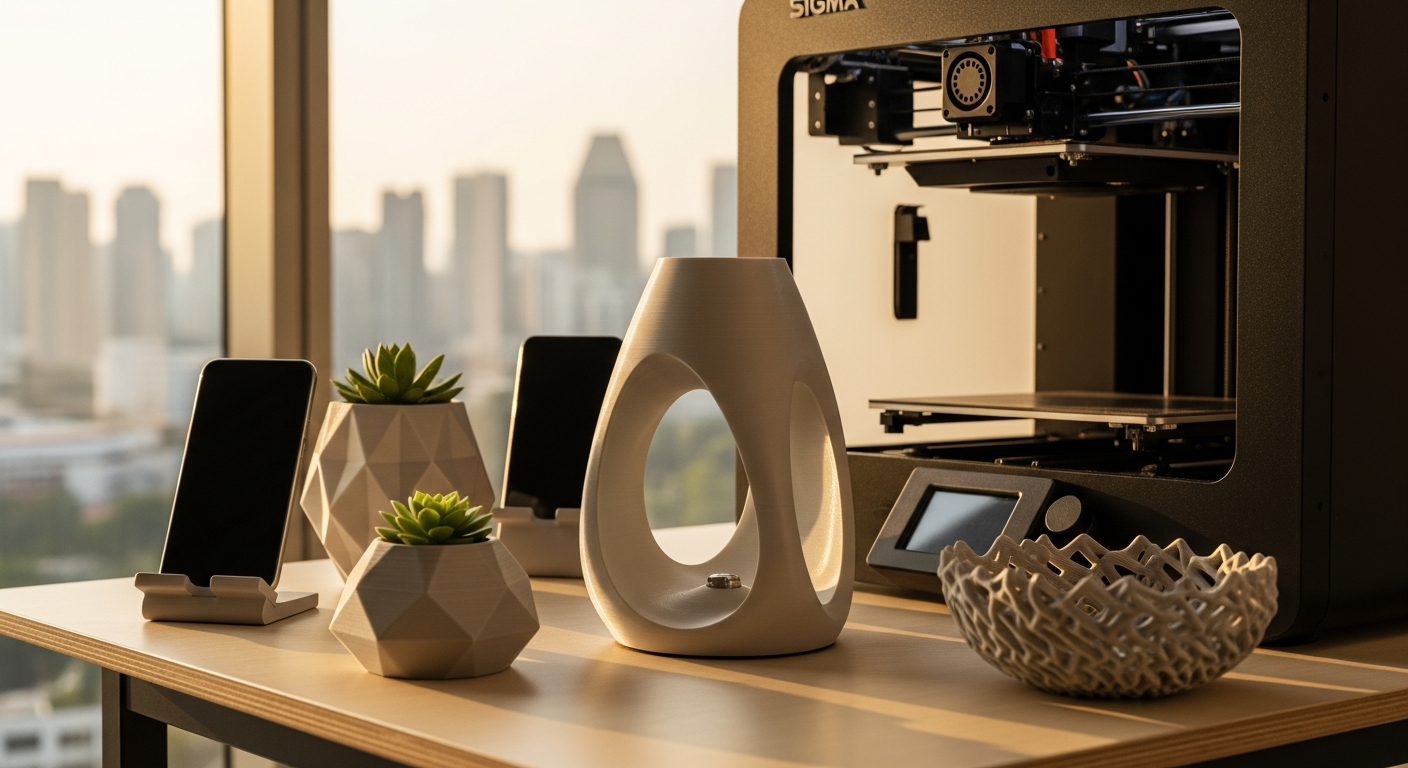
FDM excels for a specific set of lifestyle products where customization, short runs and aesthetic variety matter:
Each of these categories benefits from the agility of FDM combined with high-quality finishing and careful material selection.
Selecting the right partner is as important as choosing the printing technology. Consider these criteria:
For support moving from CAD to production, companies offering integrated model services can reduce rework—see an example resource for CAD modelling assistance at lifestyle product design singapore.
FDM pricing is driven by print time, material volume, and finishing labour. Expect prototypes to be priced per part with quick turnaround; small-batch production pricing benefits from batching and automation. Typical timelines in Singapore for a market-ready limited run range from two to eight weeks depending on complexity and finishing.
Be realistic about surface finish: while post-processing can achieve premium looks, certain finishes (e.g., high-gloss seamless surfaces) are more economical with other manufacturing methods. Plan hybrid approaches where FDM is used for complex geometry and combined with secondary manufacturing for smooth visible surfaces.
FDM 3D printing Singapore now offers a pragmatic toolkit for lifestyle product design: fast iteration, personalisation and local small-batch production—all aligned with consumer demand for unique, sustainable offerings. By pairing smart design-for-manufacturing, careful material selection and strong finishing workflows, designers and brands can deliver products that feel crafted and scale responsively.
When you map a development path, include functional testing, sustainability checkpoints and a partner capable of translating digital files into finished pieces. For companies exploring limited-edition production and collectible runs, studios offering combined custom printing and finishing are an accessible option—see an example of custom 3D printing services for limited editions at lifestyle product design singapore.
The marketplace in 2026 rewards agility, authenticity and sustainable choices. With FDM as a central production method, Singapore designers are well positioned to create lifestyle products that are innovative, personal and ready for a small-batch economy.