

Singapore’s product development scene has accelerated rapidly in recent years. From startups and design studios to established manufacturers, companies in the city-state are leveraging advanced prototyping and CAD workflows to shorten time-to-market and improve product quality. This article walks through the latest rapid prototyping Singapore trends, practical CAD modeling Singapore best practices, and how to choose partners that empower iterative design and scalable production.
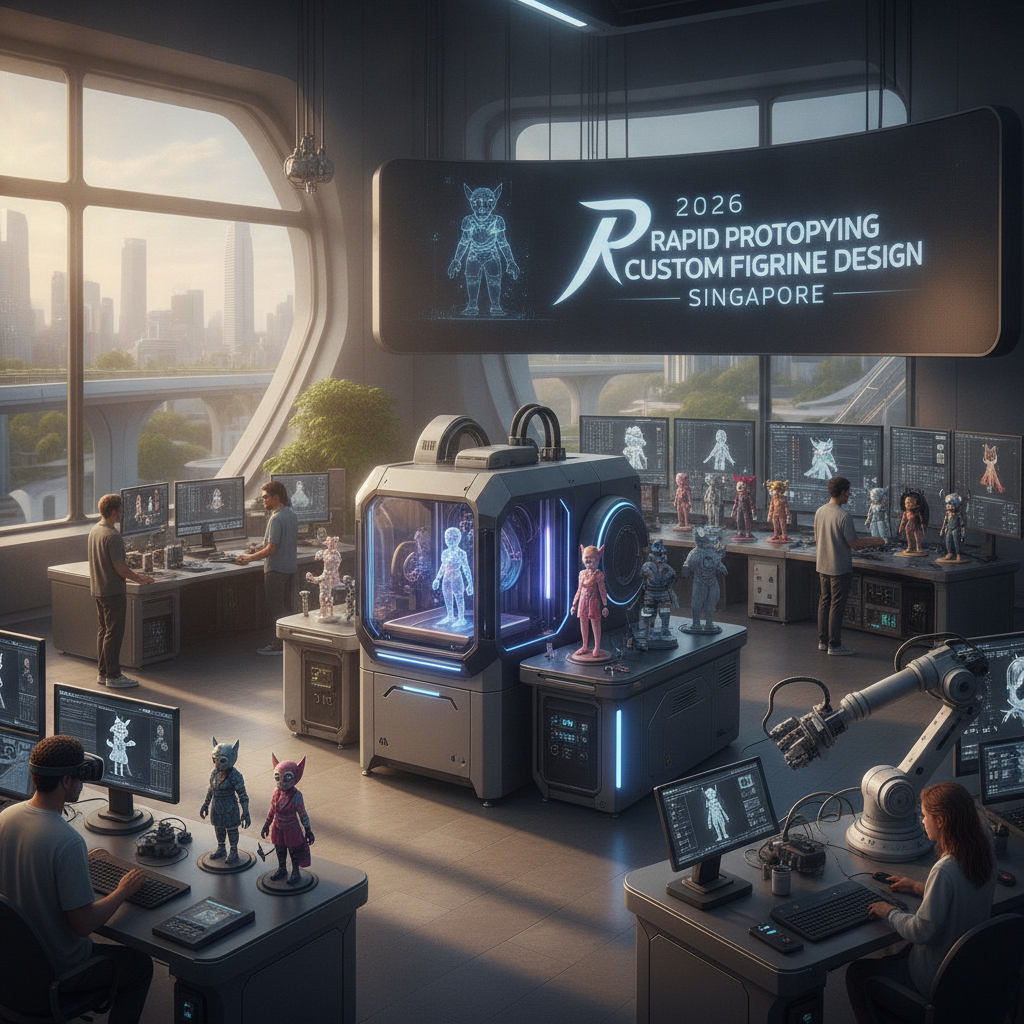
Singapore combines a compact industrial infrastructure with a high concentration of design talent, making it an ideal place for fast iteration. Local design consultancies, small-batch manufacturers, and specialist service providers collaborate closely with product designers, giving teams rapid access to both digital and physical prototyping capabilities.
Government and private sector investment in R&D, plus easy access to Southeast Asian supply chains, further amplifies the advantage. For designers seeking integrated digital workflows, resources such as services that specialize in CAD and additive manufacturing are available across the island — for example, studios offering focused CAD workflows and creative product prototyping often highlight their CAD modeling Singapore capabilities to accelerate concept-to-prototype cycles (https://artsoustudio.com/ai-driven-art-toys-with-cad-modeling-singapore-2026/).
The toolset for rapid prototyping keeps expanding. Choosing the right technology depends on the product phase, required fidelity, and material properties.
Additive manufacturing (3D printing): High-resolution resin printing (SLA/DLP) remains ideal for visual prototypes and small, intricate parts; SLS and multi-jet fusion are preferred for durable, functional prototypes; metal additive processes (DMLS/EBM) enable functional testing of load-bearing components.
Subtractive methods (CNC machining): CNC is still the fastest route to functional prototypes in engineering-grade plastics and metals when tolerances and surface finish matter.
Vacuum casting and urethane casting: These low-volume molding techniques let teams produce multiple color/material variations once a master pattern is validated.
Hybrid manufacturing: Combining machining and additive steps reduces lead time for complex geometries and enables near-production-quality prototypes.
Rapid tooling and injection molding for pilot runs: Low-volume molding is used to validate production intent before large-scale tooling investment.
Designers in Singapore increasingly pair these technologies with digital platforms and services that guide rapid iteration, such as studios promoting smart, connected workflows for lifestyle and product design (https://artsoustudio.com/smart-rapid-prototyping-singapore-lifestyle-product-design/).
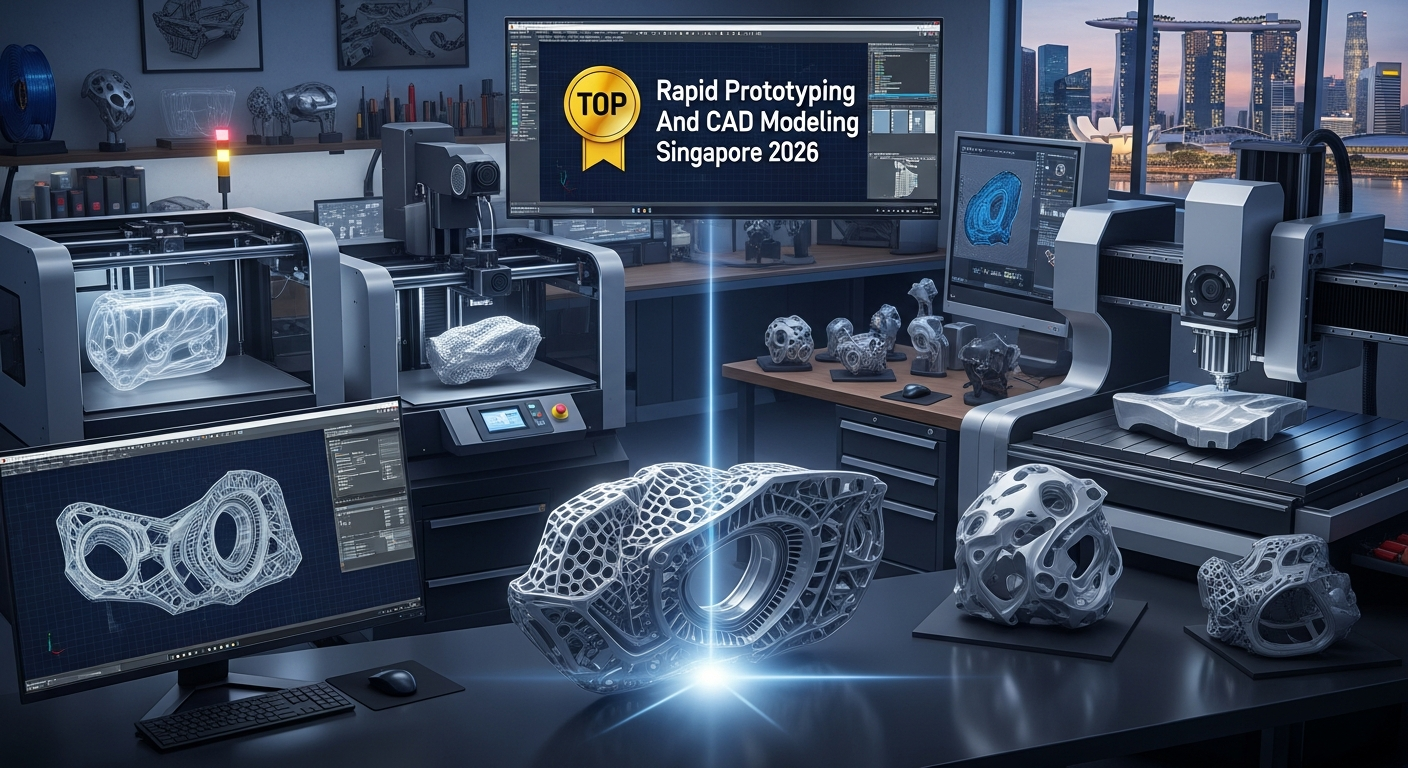
Effective CAD modeling is less about the software and more about the workflow. In 2026, CAD modeling Singapore practices emphasize speed, repeatability, and manufacturing intent:
Parametric-first modeling: Use robust parametric histories for features likely to change, enabling fast dimensional sweeps and versioning.
Component-based assemblies: Build modular sub-assemblies so teams can iterate parts in parallel without breaking large assemblies.
Early DfM checks: Incorporate design-for-manufacture checks in the CAD stage to avoid costly rework after prototyping.
Cloud-based collaboration: Cloud CAD platforms speed reviews, enable remote stakeholder input, and smooth handoffs to CAM or 3D printing services.
Integrated simulation: Rapid, lightweight FEM and motion studies within CAD help validate critical aspects before a physical prototype is printed or machined.
Design studios focusing on creative, high-detail CAD solutions demonstrate how CAD-driven ideation and manufacturing-ready modeling expedite concept validation — a workflow highlighted in projects that combine art and engineering expertise (https://artsoustudio.com/ai-driven-art-toys-with-cad-modeling-singapore-2026/).
Translating CAD models into successful prototypes requires discipline and a few practical checks:
Export formats: Confirm the service provider’s preferred formats (STL, STEP, OBJ) and ensure tolerances are set correctly during export.
Mesh quality and wall thickness: Check meshes for non-manifold edges and ensure minimum wall thickness meets the chosen process’s constraints.
Orientation and supports for printing: Early consideration of build orientation reduces post-processing and improves surface quality.
Tolerances and fit: When parts must interface, design intentional clearances based on the manufacturing method and material.
Iterative short loops: Plan small, frequent prototypes instead of one big prototype. For example, studios that specialize in figurines and collectible items often run several quick iterations — from low-res prints to final finishing — to refine aesthetics and fit (https://artsoustudio.com/personalized-custom-3d-printing-singapore-figurines-2026/).
Material choice affects not only function but also environmental impact and cost. Current trends in Singapore prioritize materials that meet lifecycle and regulatory considerations:
Bioplastics and recyclable polymers for non-structural prototypes.
Engineering-grade thermoplastics (PA12, PETG, ABS) for functional testing.
Composite and fiber-reinforced filaments for stiffness and weight-critical parts.
Metal alloys for end-use testing and small-batch production.
Sustainability practices include recycling support material where possible, selecting suppliers with transparent material sourcing, and designing for disassembly to ease end-of-life processing. Specialist vendors that handle custom finishing, painting, and small-run production can also advise on eco-friendlier processes for limited-series products (https://artsoustudio.com/limited-edition-art-toys-custom-3d-printing-singapore-2026/).
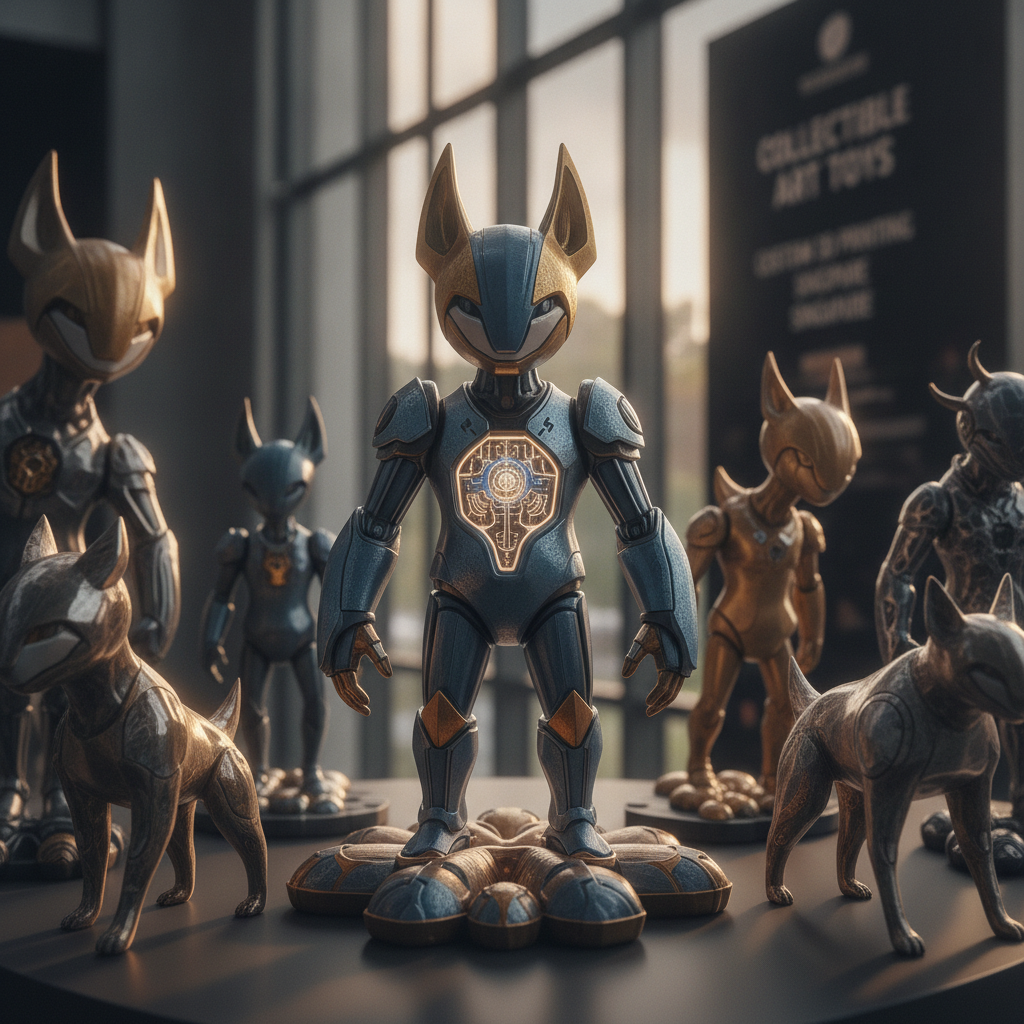
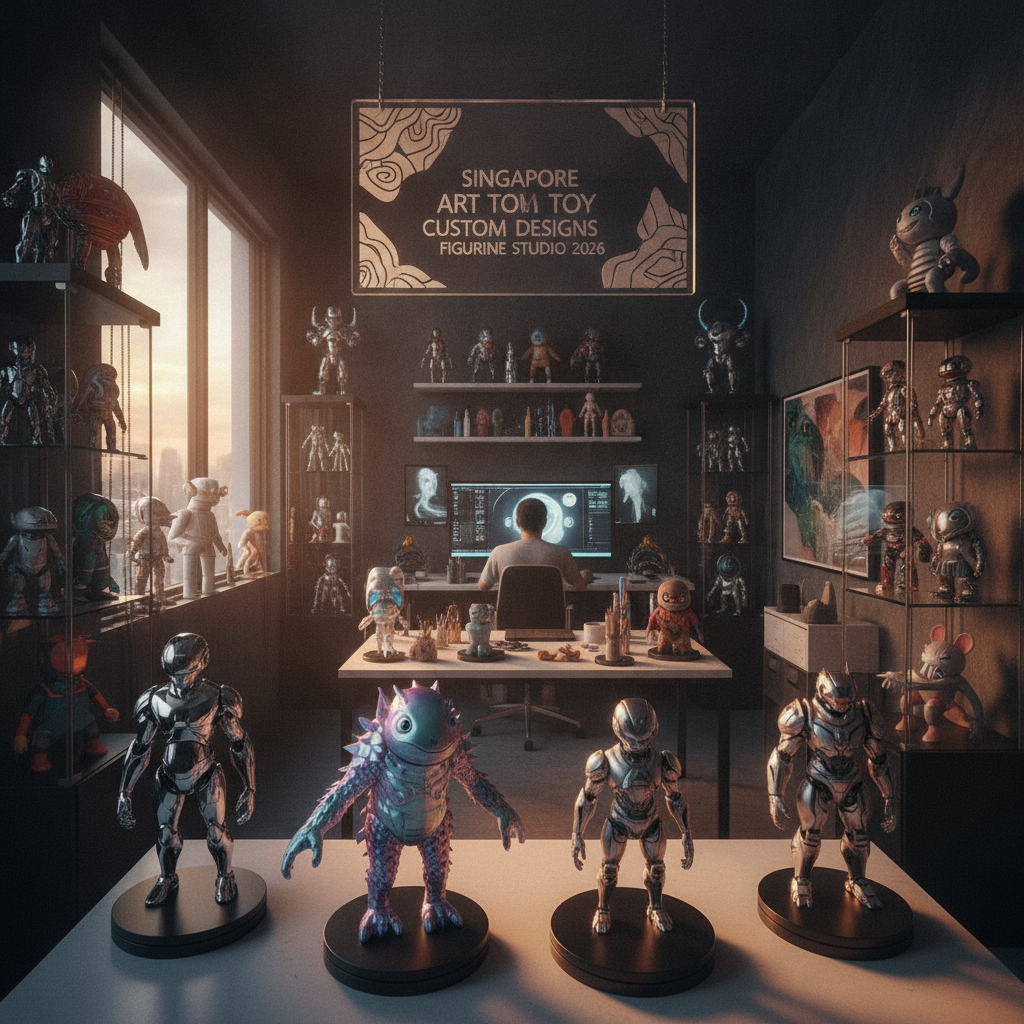
Singapore hosts a growing number of niche studios that combine high-quality CAD modeling with artisan finishing — ideal for designers in collectibles, limited-edition art toys, and personalized figurines. These studios streamline the full stack: concept CAD, prototype prints, surface finishing, and small-batch production.
For personalized or character-driven items, the workflow often begins with sculpting in digital clay tools, then refining in CAD for production readiness. Services that marry custom figurine design with efficient prototyping reduce the gap between concept and collectible (https://artsoustudio.com/custom-figurine-design-and-3d-printing-singapore-2026/).
Limited edition releases benefit from studios that can manage short runs with consistent finishing, color matching, and packaging.
If your project mixes art and engineering, partnering with studios that understand both sides ensures prototypes preserve the intended aesthetic while meeting mechanical constraints.
Selecting the right rapid prototyping or CAD partner involves more than price comparison. Consider these criteria:
Technical depth: Do they offer both CAD expertise and hands-on prototyping across multiple technologies?
Communication and iteration speed: A responsive partner who can turn around changes quickly reduces overall development time.
Finishing and post-processing: Surface finishing, painting, and assembly skills often determine whether a prototype reads like a mockup or a near-production sample.
End-to-end services: Partners that can move from concept to small-batch production simplify logistics.
Domain experience: Niche projects (medical devices, consumer electronics, collectible art toys) benefit from partners experienced in relevant regulatory and aesthetic demands.
Studios that emphasize an integrated approach to design and prototyping — for example, those offering tailored 3D printing and finishing services for collectibles and lifestyle products — typically provide clearer, faster paths to market (https://artsoustudio.com/personalized-custom-3d-printing-singapore-figurines-2026/).
Rapid prototypes vary widely in cost depending on fidelity, material, and finishing. Expect quick, low-fidelity prints to cost relatively little, while high-resolution, hand-finished samples and metal parts command premium pricing. Key strategies to manage budget and timeline:
Start with low-cost concept prints to validate form.
Move to functional prototypes for mechanical testing only when the form is locked.
Use short-run molding for multiple final-color variants to keep per-piece costs down.
Negotiate bundled services where CAD, prototyping, finishing, and assembly are handled by one provider to reduce coordination overhead.
When scaling from prototype to production, early engagement with manufacturers is helpful. Some Singapore studios facilitate this handoff by producing pilot tooling or advising on manufacturability.
AI-assisted CAD: Generative design and AI-driven topology optimization accelerate the ideation phase and produce manufacturable variants faster.
Digital twins and connected prototypes: IoT-enabled prototypes that feed performance data into simulation loops sharpen design validation.
Distributed manufacturing networks: On-demand production close to end markets reduces inventory risk and shortens delivery times.
Sustainable materials roadmap: Wider adoption of recycled and bio-based materials in prototyping and low-volume production.
Cross-disciplinary studios: Providers that combine art direction, CAD modeling, and advanced prototyping are increasingly important for lifestyle products and collectibles.
For example, creative studios have been exploring AI-driven workflows that integrate modeling and prototyping, demonstrating how CAD and rapid prototyping complement each other for art-driven, high-detail products (https://artsoustudio.com/ai-driven-art-toys-with-cad-modeling-singapore-2026/).
Rapid prototyping Singapore capabilities and advanced CAD modeling Singapore practices together create a powerful environment for product innovation. By selecting the right technologies, refining CAD workflows for manufacturing intent, and partnering with specialized studios that offer end-to-end services, teams can reduce development cycles and produce higher-quality prototypes. Whether you are refining an engineering part or launching a limited-edition collectible, Singapore’s ecosystem supports fast, creative, and scalable prototyping — from early concept to pilot production (https://artsoustudio.com/custom-figurine-design-and-3d-printing-singapore-2026/).
For designers focused on personalization and excellence, specialized studios that combine rapid prototyping with full-spectrum finishing can transform a concept into a market-ready sample quickly and reliably (https://artsoustudio.com/limited-edition-art-toys-custom-3d-printing-singapore-2026/).
Finally, integrating smart prototyping strategies—linking CAD intent with rapid manufacturing—remains the best practice for teams aiming to iterate fast while preserving production readiness (https://artsoustudio.com/smart-rapid-prototyping-singapore-lifestyle-product-design/).