Why rapid prototyping matters for limited edition art toys
Limited edition art toys demand a level of detail, finish and uniqueness that mass-produced toys often lack. Artists and designers creating collectible runs need ways to iterate quickly on sculpt, color, and texture while keeping production flexible and cost-effective. That’s where rapid prototyping in Singapore plays a decisive role: it lets makers validate designs, refine surface treatments, and produce small, high-quality batches that preserve collectible value.
Singapore’s manufacturing and design ecosystem has matured into a hub for creative product prototyping and small-batch production. For artists and brands targeting local and international collectors, combining creative vision with pragmatic rapid prototyping techniques shortens lead times and improves the final collectible’s fidelity.
Key rapid prototyping technologies used in art toy production
Not all prototyping methods are equal for art toys. Choosing the right technology affects surface finish, paintability, durability, and cost.
- SLA (stereolithography): Offers extremely high surface detail and smooth finishes ideal for finely textured sculpting. Perfect for resin cast masters.
- SLS (selective laser sintering): Good for durable parts and complex geometries, useful when structural integrity matters more than ultra-smooth surfaces.
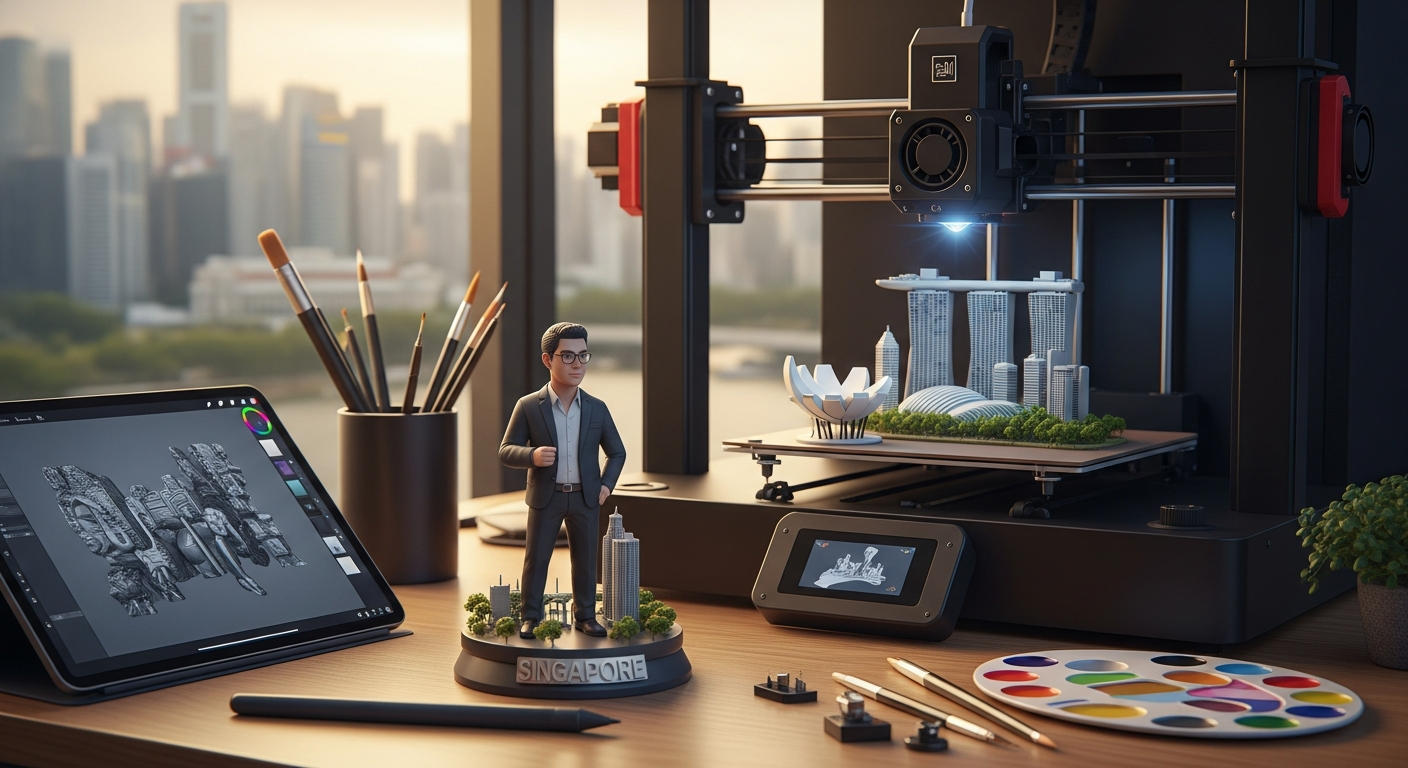
- FDM (fused deposition modeling): Cost-effective for larger prototypes and form checks. Post-processing is required for collector-grade finish. See how FDM 3D printing fits lifestyle product workflows.
- PolyJet / Multi-jet: Allows multi-material and color prototypes in a single print—helpful for integrated parts or preliminary color studies.
Each technology has trade-offs. For most limited edition art toys, combining methods—SLA masters for surface quality with silicone molds for casting, or small SLS runs for rigid limited editions—produces the best results.
From clay to collectible: a practical prototyping workflow
A repeatable process keeps iterations fast without sacrificing creativity:
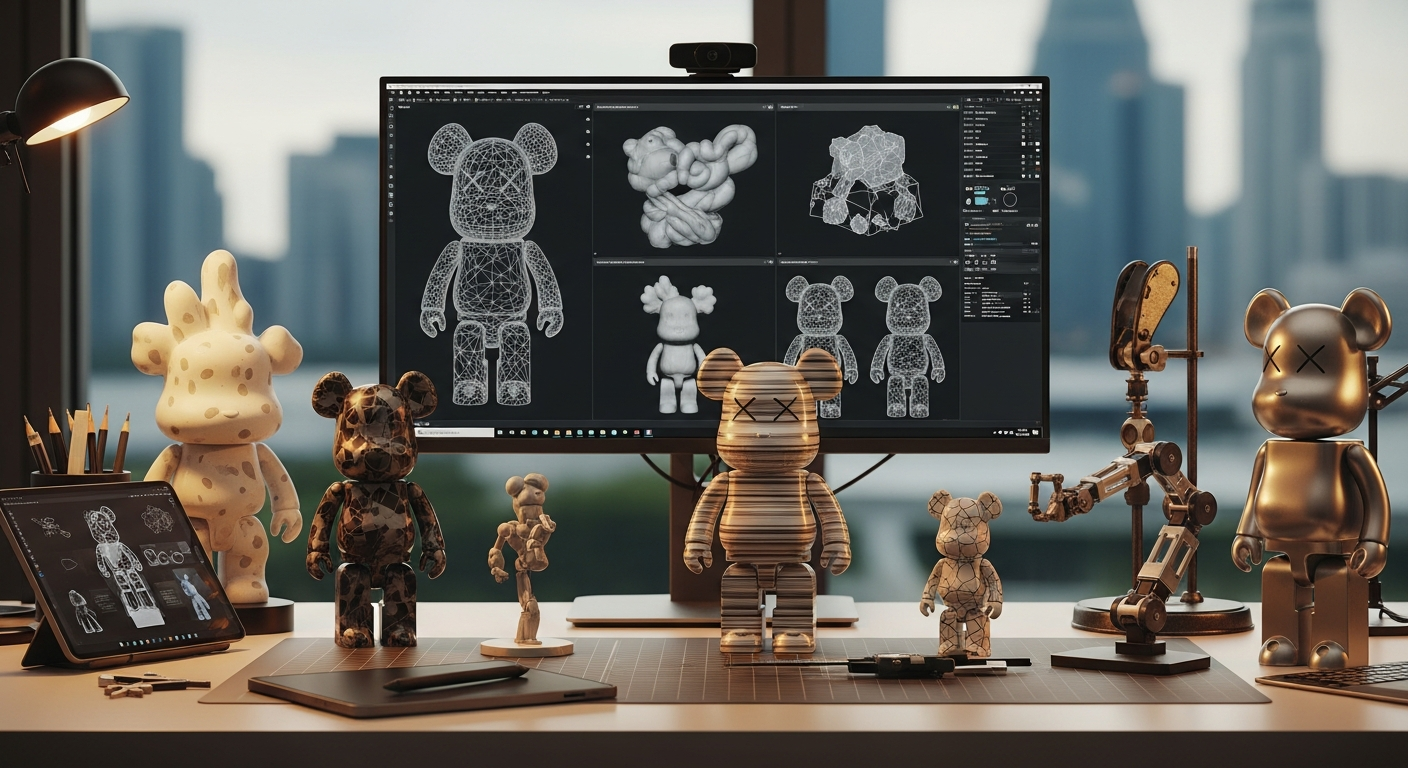
- Concept & digital sculpt: Use ZBrush, Blender or similar tools to develop high-resolution sculpts.
- Rapid prototype test prints: Produce multiple iterations via SLA or FDM to validate scale, balance and articulation.
- Surface refinement & mold prep: SLA prints are post-processed and used to make silicone molds or master tooling for small resin batches.
- Small-batch production & finishing: Cast in resin, apply primers, hand-paint, pad-print, or use tampography for consistent decals.
- Quality control & numbering: Inspect for paint fidelity, register limited-edition numbers, and add authentication markings.
Singapore’s prototyping partners can plug into each step, reducing turnaround and enabling tighter design loops. For tailored 3D printing services, visit resources like custom 3D printing Singapore.
Small-batch strategies that increase collectible value
Limited edition collectors prize rarity, craftsmanship, and provenance. Rapid prototyping enables several value-adding strategies:
- Numbered runs and certificate integration: Low-tech but powerful—numbering each piece and providing certificates enhances perceived value.
- Variant runs: Produce small color or finish variants to create sub-sets and encourage multiple purchases from collectors.
- Artist proofs and chase pieces: Keep ultra-limited variants (e.g., metallic chase) to create scarcity and secondary market interest.
- Collaboration drops: Work with local artists or brands for co-branded series; leveraging Singapore’s design community facilitates these partnerships.
Rapid prototyping Singapore suppliers help estimate costs for different run sizes and finishing options so you can price editions intelligently.
Materials, finishes and paint workflows for premium results
Collectors expect seamless paint and tactile finishes. The material chosen for the final pieces determines achievable finishes:
- Urethane resin: Favorite for art toys due to easy casting, excellent surface reproduction and paint acceptance.
- ABS-like or nylon (SLS): Better for functional parts; may require more finishing for premium look.
- SLA resins: Provide the best detail for masters and small runs, but choose durable resins for handling.
Finishing steps that elevate the collectible:
- Sanding and micro-filling on masters to remove print lines.
- Primer systems that enhance paint adhesion and reveal defects.
- Layered painting: base coats, gradients, washes and weathering for depth.
- Protective coatings: matte, satin or gloss clearcoats for durability and the desired look.
Working with an experienced finishing team in Singapore ensures repeatable results across small batches.
Managing IP, molds and limited runs securely
One concern for designers is protecting designs and controlling supply. Best practices include:
- Registering designs where applicable and watermarking digital files.
- Using non-disclosure agreements when sharing CAD or prototypes with manufacturers.
- Maintaining control of masters and molds—store or insure molds securely and consider outsourcing to a trusted local partner for distribution.
Rapid prototyping services in Singapore can provide confidentiality measures and secure production lines to protect limited edition integrity.
Cost considerations: when prototyping pays for itself
Budgeting for limited editions involves balancing prototype costs against production and margin expectations. Rapid prototyping reduces risk by allowing:
- Early detection of design issues before tooling or large-scale production.
- Testing of articulation, balance and ergonomics to avoid costly recalls.
- Accurate forecasting of paint and material costs based on physical samples.
For many designers, spending more on a single high-quality prototype saves time and money during the production phase and results in a more desirable collectible.
Trends shaping limited edition art toys (2024–2026)
Several market and tech trends are currently influencing how artists and brands approach limited edition art toys:
- Hybrid production and small-run tooling: Combining 3D printing with short-run CNC or injection molding for small high-quality runs is increasingly common.
- Collectible ecosystems: Brands pair physical toys with digital assets, AR experiences or NFTs to add provenance and community value.
- Sustainable materials: Waterborne paints, biodegradable resins and recycled packaging are becoming selling points for environmentally conscious collectors.
- Localized drops: Singapore-based production enables rapid local launches and pop-up events that build hype and reduce shipping lead times.
- Direct-to-collector platforms: Pre-orders and limited drops via brand-owned channels reduce intermediaries and improve margin control.
Leveraging rapid prototyping allows creators to react quickly to these trends—testing new materials, producing variants for digital tie-ins, or fulfilling small local drops.
Choosing the right rapid prototyping partner in Singapore
Not all service providers have experience with collectible-grade finishing or small-batch production. When evaluating partners, consider:
- Portfolio: Look for examples of art toys, lifestyle products or collectible items.
- Range of technologies: Access to SLA, SLS, FDM and post-processing capabilities is essential.
- Finishing expertise: Hand-painting, masking, pad-printing and custom coatings should be available.
- Turnaround and capacity: Ensure they can meet deadlines for drops and pre-orders.
- Communication and confidentiality: Clear workflows, progress updates and IP protection are non-negotiable.
A practical way to assess partners is to start with a prototype order and evaluate the fidelity, finish quality and responsiveness.
Case study snapshots: makers turning prototypes into sought-after runs
Across Singapore and the wider region, independent artists have used rapid prototyping to move from concept to collectible within weeks. Examples include:
- Designer series using SLA masters and silicone molds to create 100-piece resin runs with hand-painted finishes.
- Collaborations between illustrators and toy fabricators to produce chase variants and numbered sets sold through local galleries.
- Lifestyle product designers integrating 3D-printed parts into hybrid assemblies for complex, limited edition pieces; learn more about Singapore 3D printing for lifestyle product design.
These projects highlight that fast iteration and local manufacturing unlock creative strategies that scale to international audiences.
Practical checklist before your first limited edition run
- Finalize digital sculpt and request a high-resolution SLA prototype.
- Test paint adhesion and desired finish on small sample pieces.
- Confirm numbering and certificate design for provenance.
- Decide edition size and plan for variant drops to drive ongoing interest.
- Review packaging and shipping logistics—small collectibles need protective inner packaging and attractive outer presentation.
For tailored prototyping and production timelines, specialist services like custom 3D printing Singapore and focused rapid prototyping Singapore pages are helpful starting points.
Conclusion: design fast, finish beautifully, preserve rarity
Rapid prototyping in Singapore bridges the gap between creative vision and collectible reality. By selecting appropriate printing technologies, investing in finishing, protecting IP and planning edition strategies, designers can deliver limited edition art toys that command collector attention. The combination of local expertise, fast iteration cycles and access to premium finishing makes Singapore a compelling base for artists and brands turning prototypes into high-value limited runs. For makers focused on lifestyle product integration and scalable small-batch production, resources such as FDM 3D printing and other local 3D printing services provide practical pathways to launch successful collectible series.
Explore a production partner that understands both the creative and technical sides of limited edition art toys to ensure each drop feels exclusive, durable and museum-quality.