Introduction
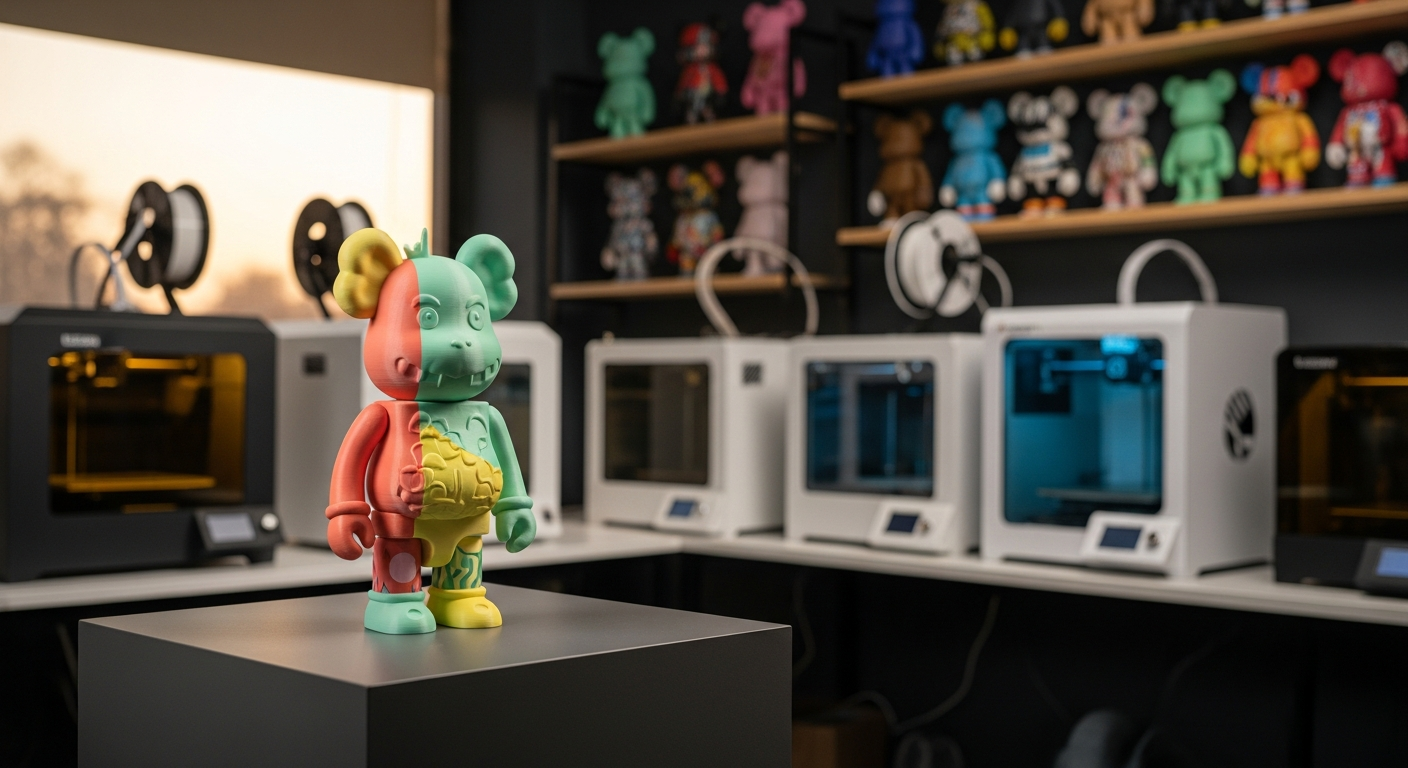
The intersection of additive manufacturing and collectible culture is accelerating. In 2025, designers, independent artists and boutique brands increasingly rely on a reliable 3D printing service Singapore to transform ideas into collectible art toys with professional finishes and fast turnarounds. This article explores the technology, workflow, materials, costs and best practices for producing standout custom art toys that meet collector expectations and scale for small production runs.
Why 3D printing service Singapore is reshaping art toys
Singapore’s manufacturing ecosystem is uniquely positioned for creative micro‑manufacturing. With fast shipping links, strong IP protections, and a concentration of service bureaus, artists can iterate quickly and ship globally. A 3D printing service Singapore offers benefits that matter to toy creators:
- Rapid prototyping to validate sculpt and articulation within days.
- Multiple technologies (SLA, SLS, MJF, PolyJet, FDM) tailored to finish and durability needs.
- Post-processing capabilities: sanding, priming, painting, metalizing, and pad printing.
- Low minimums and short runs that support limited editions and crowdfunding fulfillment.
Local hubs also host prototyping consultations and small-batch runs, enabling artists to move from concept to market-ready pieces without large capital expenditure. Many creators link product drops to digital channels and communities to maximize demand for these limited pieces.
Materials and technologies powering custom art toys
Choosing the right process depends on the final look, feel and function of the toy:
- SLA (Stereolithography): High-resolution resin prints ideal for fine sculpt detail and toy prototypes that require a smooth surface for painting. Often used for collectible figurines.
- SLS (Selective Laser Sintering): Nylon powder parts that are strong and slightly textured; good for functional components or toys that require some toughness.
- MJF (Multi Jet Fusion): Produces durable nylon parts with good surface quality and consistent mechanical properties, suitable for small functional runs.
- PolyJet / Multi-material Jetting: Best for multi-color and multi-material prototypes when soft-touch elements or intricate color mapping are needed.
- Full-color sandstone and binder jetting: Useful for display pieces, concept models or promotional versions with full-color graphics.
Sustainability trends are growing: biodegradable resins and recycled nylon are more commonly offered, and many studios now provide guidance on material lifecycles for environmentally conscious creators.
Design-to-production workflow for art toys
A reliable 3D printing service streamlines the design-to-production pipeline. A typical workflow includes:
- Concept and sketching: Define character, scale and articulation.
- 3D sculpting: Use ZBrush, Blender or similar for high-detail sculpts. Pay attention to wall thickness and assembly joints.
- File preparation: Export watertight STL/OBJ, check normals, repair meshes, and hollow models where appropriate to save material costs.
- Test prints: Produce a single high-resolution prototype to verify proportions, articulation and painting surfaces.
- Post-processing: Fill, sand, prime and finish; surface preparation drastically affects final paint quality.
- Small-batch production: Finalize print technology and run quantities (10–500 pieces typical for boutique releases).
Working with a vendor that offers both printing and finishing reduces logistical complexity and avoids transfer problems between print and paint vendors. For many artists, outsourcing finishing ensures a uniform look across a limited run.
File prep tips designers must know
Good design for 3D printing avoids unexpected costs and delays. Practical tips:
- Ensure minimum wall thickness appropriate for chosen process (e.g., 0.8–1.5 mm for many processes).
- Hollow larger parts and add escape holes to reduce material use and prevent trapped powder or resin.
- Design snaps, pegs and tolerances for assembly—leave clearance for painted parts (usually 0.2–0.5 mm depending on finish).
- Orient parts for optimal surface finish: faces visible to collectors should be oriented to minimize supports.
- Include registration features if pieces require post-assembly alignment.
Following vendor-specific guidelines early avoids repeated iterations and speeds delivery.
Finishing and surface treatments that elevate art toys
What differentiates a mass-produced figure from a collectible is finish. Common finishing services include:
- Primer and high-grit sanding for ultra-smooth surfaces.
- Airbrushing, hand-painting and tampo/pad printing for crisp logos and details.
- Clear coats (matte, satin or gloss) to protect painted surfaces.
- Electroplating, vacuum metalizing or chrome finishes for premium effects.
- Soft-touch overmolds or rubberized coatings for tactile parts.
A 3D printing service Singapore that bundles finishing can deliver near-turnkey collectibles, which is especially useful for artists who want consistent quality across limited editions.
Cost, turnaround and scalability considerations
Pricing depends on technology, material and finishing. Typical ranges (indicative):
- Single prototype (high-resolution SLA): S$50–S$300 depending on size and post-processing.
- Small batch (10–100 units): S$30–S$150 per unit depending on material and finish.
- Mid batches (100–500 units): Price per unit declines as setup amortizes.
Turnaround times:
- Prototyping: 1–7 business days depending on complexity and finish.
- Small runs with finishing: 2–6 weeks depending on post-processing steps and painting complexity.
Scaling considerations: start with a test run to confirm fit and finish, then scale with incremental batches. If demand spikes (crowdfunding, viral drops), a local 3D printing service can produce follow-up runs faster than overseas tooling-dependent approaches.
Case studies and creative opportunities
- Independent character designers can produce limited-run “artist editions” with signed bases and unique paint variants to increase collector interest.
- Brand collaborations use custom art toys as promotional collectibles; full-color printing or mixed-media assemblies help match campaign aesthetics.
- Designers who couple physical drops with digital assets (AR previews, NFTs) create richer collector experiences and stronger pre-order campaigns.
Local markets in Singapore and Southeast Asia have shown strong appetite for exclusive releases at events and online platforms; a dependable 3D printing partner makes these campaigns realistic.
How to choose a 3D printing service in Singapore
Selecting the right partner matters. Evaluate potential vendors on these criteria:
- Technology breadth: Can they recommend SLA, SLS or MJF depending on your needs?
- Finishing capability: Do they offer sanding, painting and plating in-house?
- Communication and proofs: Are they proactive with test prints and color proofs?
- Minimums and flexibility: Can they handle 10-piece runs and scale to hundreds?
- IP and confidentiality: Do they sign NDAs and protect design rights?
Check examples of finished pieces and request a sample print. Many artists find it useful to work with studios that also advise on design for manufacturability and packaging.
For designers seeking professional-grade outcomes, connecting with a full-service partner can cut time to market while preserving creative control. Explore services that show a strong portfolio of collectible work, and ask for references from other toy designers.
Practical next steps for creators in 2025
- Start with a high-res prototype print to validate sculpt and articulation.
- Budget for finishing—paint and coatings are often as important as the sculpt.
- Plan limited runs and variants to maximize collector demand without overproducing.
- Use local services for faster turnaround and tighter quality control.
Whether you are launching a first run or scaling a signature series, a knowledgeable 3D printing partner helps convert creativity into collectible products. For research and supplier sourcing, review studios that demonstrate consistent results and transparent quoting.
Resources and links
- Learn about dedicated partners and service options such as 3D printing service Singapore for local production and rapid prototypes.
- See examples of finished collectible projects and painting options at art toys.
- For small-batch production and finishing workflows, discover custom art toys case studies.
- If you need help with early-stage development and iterative prints, consider a prototyping service that supports sculpt-to-shelf pipelines.
- For specialty finishes and premium editions, check vendors offering tailored support for designer figures.
Conclusion
The evolving capabilities of 3D printing mean that in 2025 more artists can bring professional-grade art toys to market without heavy tooling costs. With the right partners, creators gain access to rapid prototyping, refined finishing, and scalable small-batch production that serve both collectors and niche markets. Thoughtful design, the right material choices and a service provider that understands finishing will turn promising sculpts into cherished collectibles.