
The journey of creating custom figurines represents one of the most rewarding aspects of modern art toy culture, transforming personal visions, beloved characters, and unique concepts into tangible collectible masterpieces. This comprehensive design process combines traditional artistic principles with cutting-edge digital tools and manufacturing techniques to produce personalized art toys that capture individual creativity and storytelling.
Custom figurine design has evolved from a niche service offered by specialized studios to an accessible creative outlet for artists, collectors, and enthusiasts worldwide. The democratization of 3D modeling software, affordable 3D printing technology, and online communities has created unprecedented opportunities for creators to bring their imaginative characters to life.
Malaysia and Singapore’s vibrant creative community and technological infrastructure provide ideal conditions for custom figurine development, with numerous resources ranging from maker spaces to professional design studios supporting creators at every skill level. Understanding the complete design process empowers both aspiring creators and commissioners to make informed decisions that result in exceptional finished pieces.
Successful custom figurine projects begin with clear vision statements that define the character’s purpose, aesthetic direction, and intended audience. Whether creating original intellectual property, commemorating special occasions, or translating existing concepts into three-dimensional form, establishing concrete objectives guides every subsequent design decision.
Character backstory development enriches the design process by providing context that influences pose selection, expression choices, and detail prioritization. Even simple figures benefit from narrative foundations that inform artistic decisions and create emotional connections between creators and their finished pieces.
Target audience considerations affect complexity levels, safety requirements, and production methods. Figurines intended for adult collectors can incorporate delicate details and premium materials, while pieces designed for younger audiences require robust construction and safety-compliant materials and finishes.
Visual research compilation creates comprehensive reference libraries that inform design decisions throughout the creation process. Collect images showing character expressions, costume details, pose variations, and environmental contexts that will influence the final figurine design.
Style analysis examines existing art toy aesthetics to identify approaches that complement your vision while ensuring originality. Study successful custom figurines to understand effective proportion choices, detail levels, and surface treatment options that enhance character personality and visual appeal.
Technical research investigates manufacturing constraints and opportunities specific to your chosen production methods. Understanding 3D printing capabilities, molding requirements, or hand-sculpting limitations early in the process prevents costly revisions and ensures feasible final designs.
Thumbnail sketching rapidly explores multiple pose options, viewing angles, and compositional approaches without committing significant time to any single direction. These quick studies identify promising concepts while eliminating weaker alternatives early in the creative process.
Proportion studies establish character relationships between head, body, and limb sizes that define the figurine’s overall aesthetic appeal. Art toy proportions often deviate from realistic human anatomy to enhance cuteness, dynamism, or stylistic consistency with specific artistic movements.
Expression exploration through facial feature variations dramatically impacts character personality and emotional resonance. Document various eye shapes, mouth positions, and eyebrow angles to identify combinations that best communicate your intended character traits and mood.
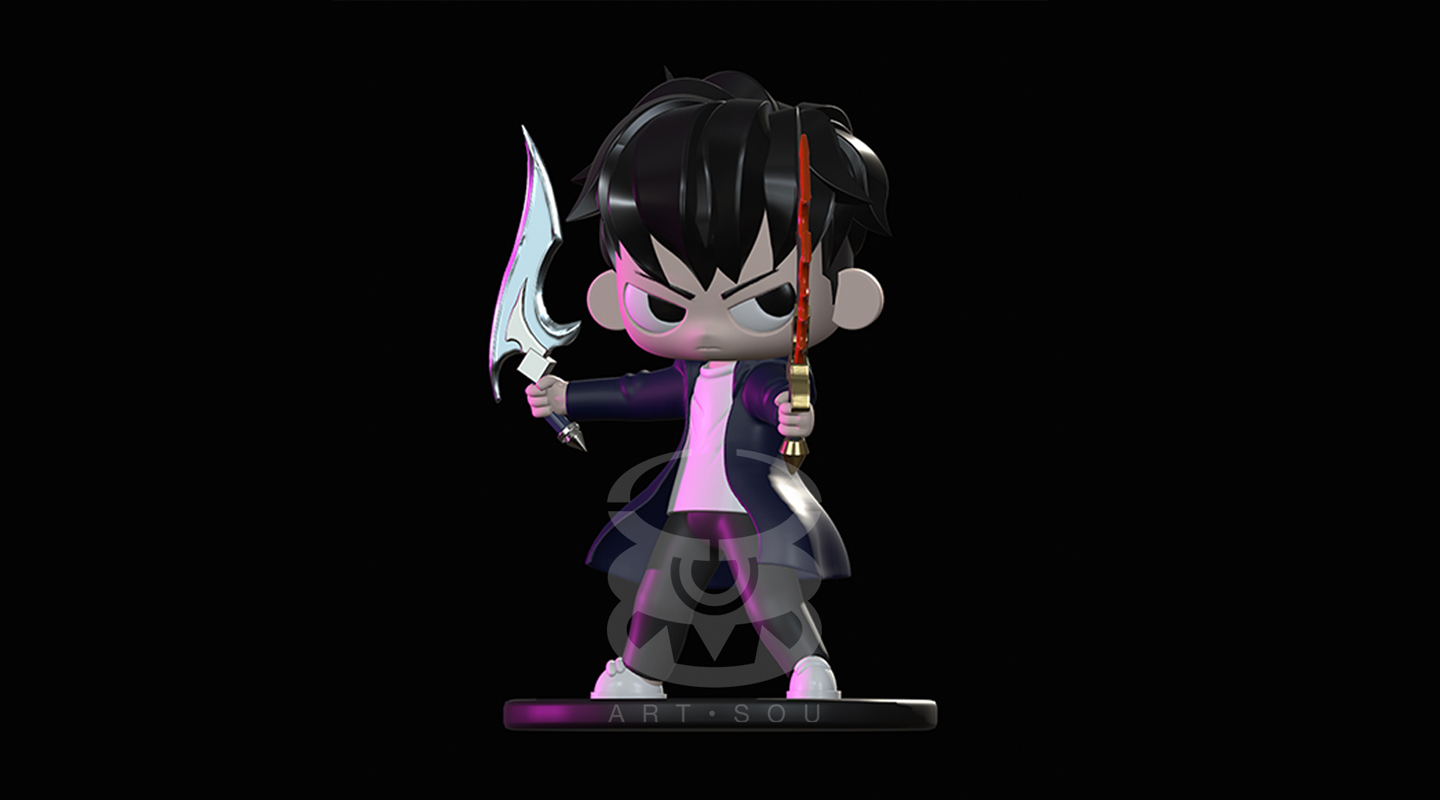
Art Sou Studio exemplifies thorough concept development through their collaborative approach with young artists, ensuring each custom figurine reflects both technical excellence and authentic creative vision that resonates with collectors and art enthusiasts alike.
Blender provides comprehensive modeling capabilities suitable for custom figurine creation, offering both hard-surface modeling tools for mechanical elements and sculpting brushes for organic character features. Its free availability makes it accessible for independent creators while providing professional-grade functionality.
ZBrush specializes in digital sculpting with intuitive brush-based tools that translate traditional sculpture techniques into digital workflows. Its industry-standard status among character artists makes it valuable for creators seeking maximum detail control and surface refinement capabilities.
Fusion 360 excels at parametric modeling for figurines requiring precise mechanical elements, joints, or geometric patterns. Its hybrid approach combining traditional CAD tools with sculpting capabilities suits projects requiring both organic character elements and technical precision components.
Primitive shape blocking establishes basic proportions and overall silhouette before adding surface details. This approach ensures solid foundational geometry while maintaining flexibility for proportion adjustments during early development stages.
Edge flow optimization creates clean topology that supports smooth surface subdivision and efficient mesh manipulation during sculpting phases. Proper edge flow prevents shading artifacts while enabling natural deformation for pose adjustments or animation preparation.
Symmetry utilization streamlines modeling efficiency by developing one side of symmetric characters before mirroring geometry to create complete forms. This approach ensures perfect bilateral symmetry while reducing modeling time and maintaining consistency across character features.
Primary form definition establishes major muscle groups, clothing folds, and facial features that define character personality and physical characteristics. Focus on large-scale relationships before addressing fine surface details that enhance realism or stylistic appeal.
Secondary detail addition includes costume textures, fabric patterns, accessory elements, and surface variations that enhance visual interest and storytelling capabilities. These elements should support rather than overwhelm primary character forms.
Tertiary detail incorporation adds fine textures, wear patterns, and micro-details that enhance realism and production value. Consider viewing distances and production methods when determining appropriate detail levels to ensure visibility in finished pieces.
3D printing suitability assessment examines model complexity, detail resolution requirements, and production volume to determine optimal printing technologies. Resin printing excels for detailed prototypes and small production runs, while FDM printing suits larger figures or simplified designs.
Traditional sculpting integration may enhance certain projects through hybrid approaches combining digital design with hand-crafted elements. Clay details, wire armatures, or mixed-media components can add unique characteristics impossible to achieve through purely digital methods.
Production scaling considerations affect detail levels, tolerances, and assembly complexity. Single prototype pieces can incorporate intricate details that become problematic for larger production runs requiring consistent quality and reasonable production times.
Mesh cleanup removes duplicate vertices, non-manifold geometry, and other technical issues that prevent successful 3D printing or manufacturing. Use automated cleanup tools followed by manual inspection to ensure watertight, printable geometry.
Wall thickness analysis ensures structural integrity while minimizing material usage and production costs. Maintain minimum thickness requirements for chosen materials and production methods while avoiding unnecessarily thick sections that waste resources without improving functionality.
Support structure planning during design phase optimizes surface quality by positioning support contact points on less visible surfaces. Design features like flat bases or self-supporting geometries reduce support requirements and post-processing work.
Size optimization balances visual impact, display requirements, and production constraints. Consider typical art toy scales (3-12 inches) and how your design will appear alongside existing collections or display environments.
Detail visibility assessment ensures important character features remain recognizable at intended production scales. Features that appear clear in digital form may become indistinct when printed at small sizes, requiring design adjustments or simplification.
Production cost analysis examines material requirements, processing time, and finishing work to establish realistic pricing for commissioned pieces or potential commercial production. Factor all costs including failed prints, post-processing materials, and time investments.
Test printing validates digital designs through physical prototypes that reveal issues invisible in screen-based previews. Print at intended final scale to accurately assess detail visibility, structural integrity, and overall aesthetic appeal.
Assembly verification for multi-part designs ensures proper fit and function between components. Test joint tolerances, connection methods, and assembly sequences to identify potential problems before committing to final production.
Proportion assessment through physical handling provides insights impossible to gain from digital models. Hold prototypes at viewing distances to evaluate scale relationships, visual balance, and overall presence that influence collector appeal.
Stakeholder review processes gather input from clients, collaborators, or target audience representatives to identify improvement opportunities. Document feedback systematically and prioritize changes based on impact and feasibility.
Technical evaluation examines structural weak points, manufacturing difficulties, or design elements that could benefit from optimization. Professional evaluation from experienced manufacturers or designers provides valuable insights for improving final results.
Aesthetic refinement addresses visual concerns identified through prototype evaluation and stakeholder feedback. Fine-tune proportions, adjust surface details, or modify poses to enhance character appeal and emotional resonance.
Quality assurance protocols ensure final designs meet established standards for detail resolution, structural integrity, and aesthetic appeal. Develop consistent evaluation criteria that can be applied across different projects and production methods.
Client approval processes for commissioned pieces establish clear communication protocols and revision limits to prevent scope creep while ensuring customer satisfaction. Document approved specifications to guide final production phases.
Production readiness verification confirms that final files are properly prepared for chosen manufacturing methods, with appropriate tolerances, support structures, and technical specifications for successful production.
Art Sou Studio’s meticulous attention to prototyping and iteration demonstrates how professional custom figurine creators achieve exceptional results through systematic testing and refinement processes that ensure every finished piece meets the highest quality standards.
A: Complete custom figurine projects typically require 2-6 weeks depending on complexity and revision requirements. Simple character adaptations may complete in 1-2 weeks, while complex original designs with multiple iterations can extend to 8-12 weeks. Clear initial briefing and prompt feedback accelerate the process significantly.
A: Provide reference images, character descriptions, size requirements, pose preferences, and budget constraints. Include specific details about colors, textures, accessories, and any special features. The more comprehensive your initial brief, the more accurately designers can estimate costs and timelines.
A: Yes, 2D artwork can be translated into 3D figurines, though this requires artistic interpretation for unseen angles and depth relationships. Provide multiple views, color references, and style preferences to guide the conversion process. Some artistic license is typically necessary for optimal 3D translation.
A: Digital sculpting offers unlimited revision capabilities, perfect symmetry, and direct-to-production workflows, while traditional clay provides tactile feedback and unique handcrafted characteristics. Many professional projects combine both approaches, using digital tools for precision elements and clay for organic details or textures.
Discover how Art Sou Studio’s collaborative design process transforms concepts into stunning reality, where young artists combine traditional craftsmanship with innovative 3D printing technology.