Why 3D printing is reshaping how creators make art toys
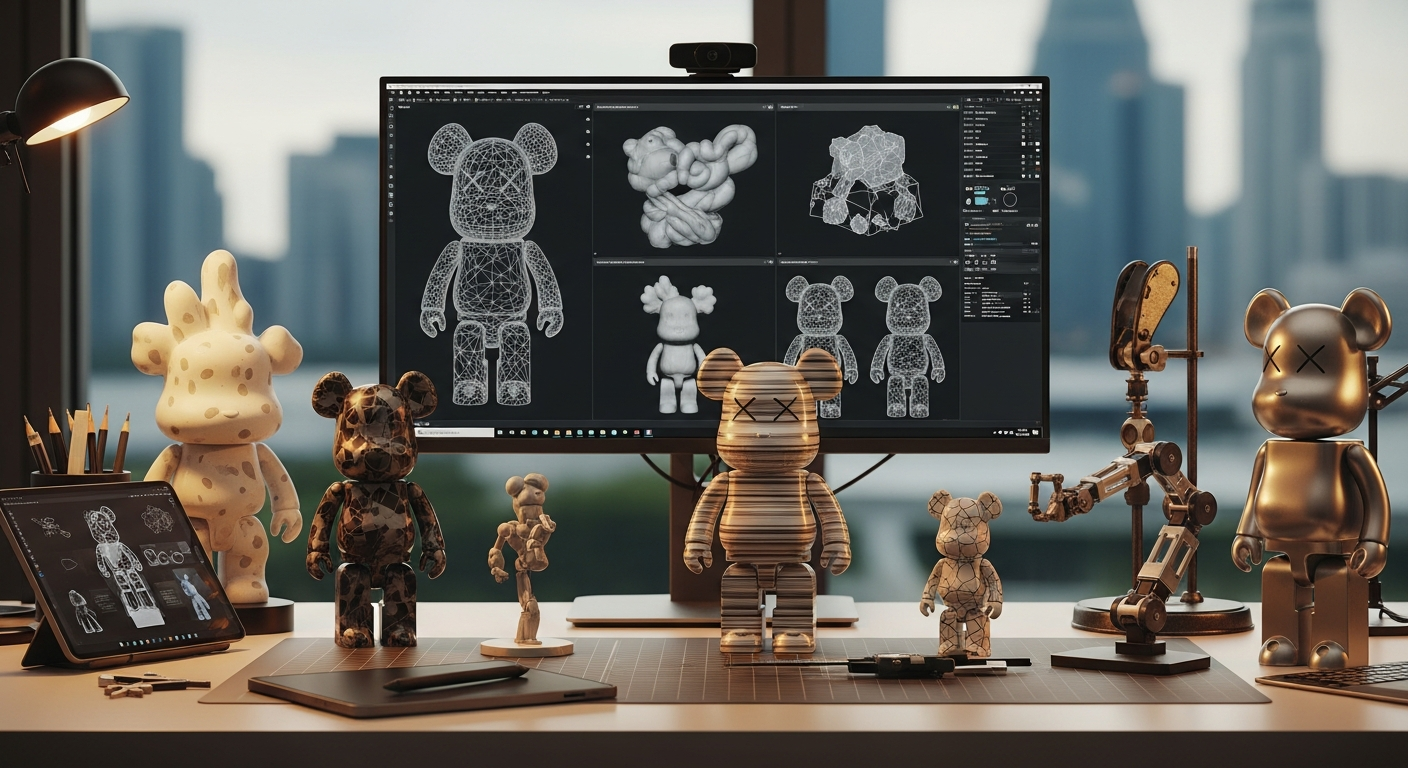
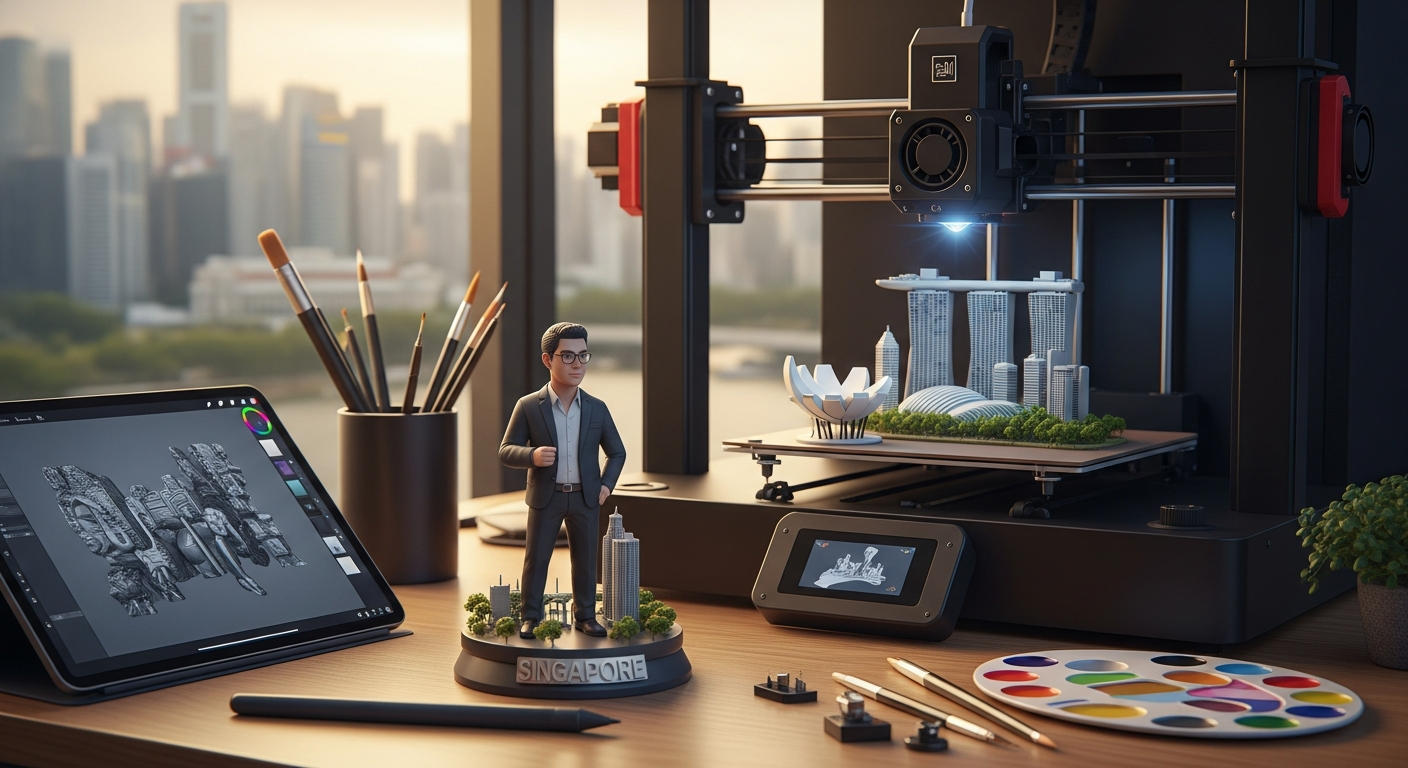
The designer toy scene has evolved from limited-run resin figures and vinyl imports to a fast-moving, global community of independent artists, studios, and collectors. 3D printing is central to that shift: it enables rapid iteration, highly detailed sculpts, and direct-to-manufacture workflows that were prohibitively expensive even a few years ago. For creators in Singapore, a local 3d printing service singapore offers speed, close collaboration, and access to finishes that bring art toys to life — from prototype concept to small-batch production.
This article distills practical options, finishing techniques, and strategies so you can move from sketch to shelf with confidence.
Key 3D printing technologies for art toys
Different 3D printing methods yield different strengths. Choosing the right process depends on detail, color needs, durability, and budget.
- SLA / DLP (resin stereolithography): Excellent for ultra-fine detail, crisp facial features, and smooth surfaces. Ideal for master sculpts and pieces that will be hand-painted or molded for casting.
- PolyJet / MultiJet: Produces smooth parts with multi-material and full-color capability. Good for prototypes that need realistic color and soft-touch elements without painting.
- Binder jetting (full-color): Capable of complex full-color prints in a single run, useful for intricate color patterns and test marketing colorways.
- SLS (selective laser sintering): Uses nylon powders to create strong, slightly grainy parts that hold up to handling and small run play-testing. Great for durable components, hinges, or articulated joints.
- FDM (fused deposition modeling): Affordable for quick shape proofs and structural tests. Surface finish needs more post-processing for display-grade toys.
Local Singapore shops often combine multiple processes under one roof, so you can prototype in SLA and then move to SLS or urethane casting for small batches.
Vivid color finishes: options and trade-offs
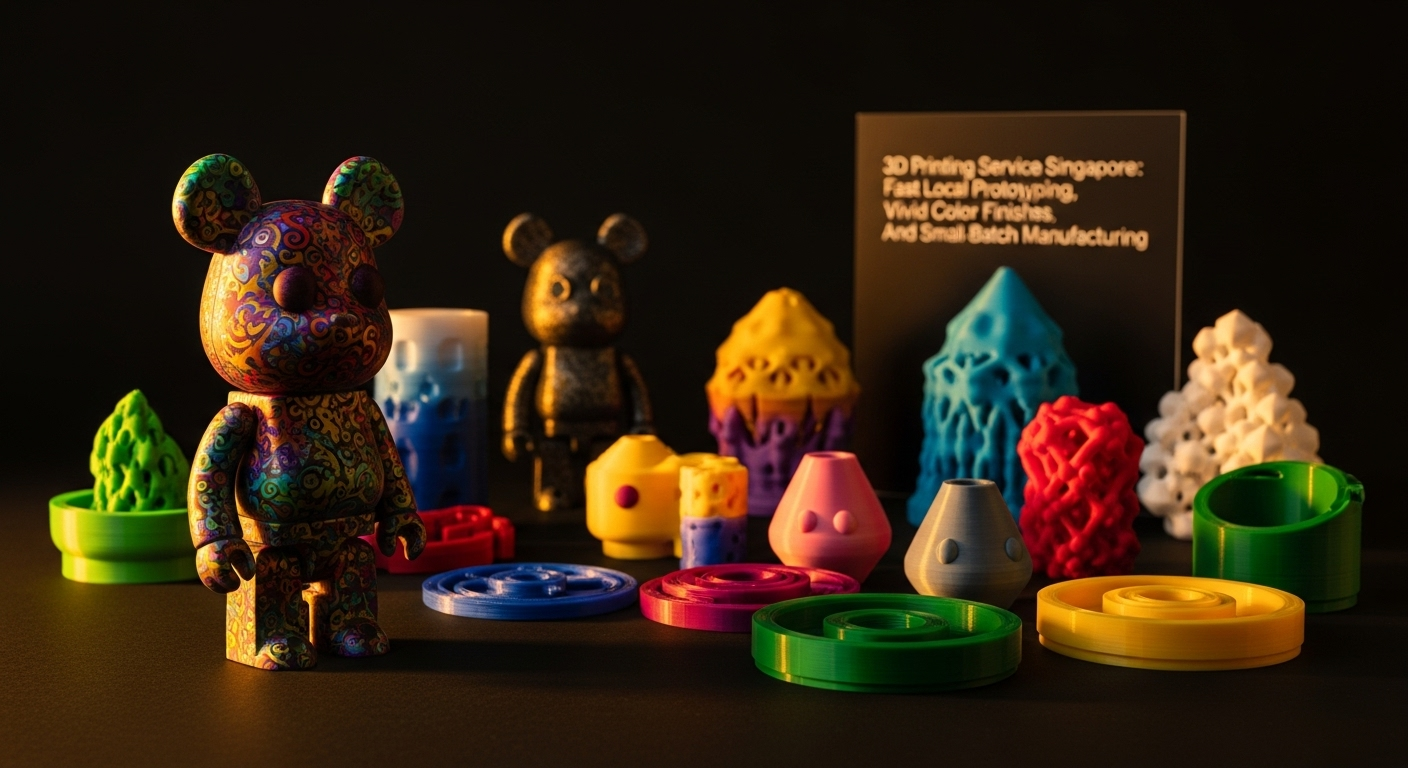
Color makes art toys collectible. You can achieve striking results with several finishing approaches:
- Full-color 3D printing: Quick and accurate for single-piece color prototypes. Binder jetting or PolyJet can reproduce complex patterns but may have limits in color vibrancy or surface feel.
- Hand painting and airbrushing: The traditional route for designer toys. 3D printed masters (usually SLA) are primed, sanded, and painted by hand. This gives the richest texture and collector appeal.
- UV printing: Direct-to-part UV printers can apply precise decals and gradients onto curved surfaces, speeding up production for limited runs.
- Hydro dipping and water transfer printing: Excellent for transferring complex patterns to multiple pieces consistently, ideal for metallics and marbles.
- Urethane casting from 3D printed masters: Print high-quality masters, create silicone molds, and cast in colored urethane resins for small-batch runs with consistent colorways.
Each method has cost, turnaround, and scalability implications. Full-color printing removes painting steps but can be pricier per unit. Urethane casting scales economically up to a few hundred units before considering tooling for injection molding.
Small-batch manufacturing strategies that Singapore makers use
Small brands benefit from hybrid workflows that blend digital and traditional manufacturing:
- Prototype → Mold → Cast: Use a high-detail SLA master to make silicone molds, then cast urethane for batches of 10–500. Fast and cost-effective for collectibles.
- Direct low-volume production: Use SLS or PolyJet for batches of 10–100 when parts need durability or integrated features like screw bosses.
- Low-volume injection molding: For runs above 500–1,000, soft tooling or rapid steel tooling becomes cost-effective. 3D printed masters speed up mold design and validation.
- Assembly and finishing hubs: Many Singapore 3d printing service singapore providers offer finishing, QC, and packaging services so you can deliver market-ready toys.
These approaches let creators control quality and experiment with colorways without committing to expensive large-scale tooling.
Design for 3D printing: practical tips for art toys
Optimizing your 3D model for manufacturing saves time and cost. Key considerations:
- Wall thickness: Maintain consistent minimum thickness appropriate to the process. SLA can handle thinner walls than SLS or FDM. Hollow parts reduce resin cost but need drain/vent holes.
- Hollowing and escape holes: For resin prints that will be cast or painted, add holes to drain uncured resin and prevent pressure buildup during post-cure.
- Support-friendly orientation: Design with support removal in mind to avoid visible marks on focal surfaces. Use sacrificial tabs or split parts at invisible seams.
- Tolerances and fit: If parts snap or rotate, design tolerances with the chosen process in mind. SLS has higher tolerance variability than injection molding.
- Assembly features: Integrate pegs, sockets, and screw bosses into prints for repeatable assembly. Consider adding registration keys for painted pieces.
- Surface texture control: Sculpt textures at the model level rather than relying only on post-processing. 3D printing can reproduce fine dentition or fabric-like patterns if modeled correctly.
Many 3D printing services in Singapore offer design for additive manufacturing (DFAM) reviews to help refine models for specific printers.
Costs, lead times, and what to expect locally
Working with a local 3d printing service singapore gives you predictable lead times and easier communication. Typical expectations:
- Prototypes: SLA or PolyJet prototypes can be ready in 24–72 hours for simple parts. Complex assemblies or full-color prints may take longer.
- Small batches: Urethane casting batches can be turned around in 1–3 weeks depending on finishing. SLS runs often ship within 1–2 weeks.
- Cost drivers: Part size, material choice, surface finish, color processes, and post-processing labor drive price. Hand-painted finishes and multiple colorways add to cost per unit.
Budget planning tip: start with a small, display-quality prototype for marketing and crowdfunding, then scale tooling investments as demand proves out.
Choosing the right 3D printing service in Singapore
Selecting a partner is more than price comparison. Look for:
- Capabilities: Do they offer the specific printing technology and finishing options you need? Can they handle silicone molds or urethane casting if you plan small-batch production?
- Finish quality: Ask for photos of previous art toy projects or samples. Smooth priming and paint prep are non-negotiable for collectible-grade toys.
- Communication and IP handling: A local partner simplifies NDA discussions, in-person review, and secure handling of designs and molds.
- Turnaround and scalability: Confirm lead times and ask whether they can scale to larger runs or connect you with injection molding resources.
- Reviews and case studies: Look for client testimonials or case studies, especially from other toy designers or studios.
Visiting a shop or requesting sample packages can save months of iteration later.
Sustainability and current trends affecting art toys production
Sustainability is increasingly influencing material choices and consumer expectations. Notable trends:
- Recyclable and bio-based plastics: Nylon SLS can be recycled in some cycles. New bio-resins are emerging that reduce lifecycle impact.
- Resin waste management: Responsible shops now offer resin recycling, proper disposal, and dust control for powder-based processes.
- Limited runs and exclusive drops: Micro-limited editions and collaboration drops remain popular; 3D printing enables these without heavy tooling investment.
- Digital twins and NFTs: Physical toys with authenticated digital assets remain niche but growing, and quick prototyping helps creators test market interest.
Singapore’s focus on sustainable manufacturing and logistics efficiency makes it a pragmatic base for environmentally aware toy creators.
Bringing it together: a realistic workflow for designers
A typical, efficient path for a new art toy might be:
- Sculpt concept in digital 3D (ZBrush, Blender).
- Print an SLA master for fit and form tests.
- Refine the model after hands-on review and collector feedback.
- Produce a final master and make silicone molds.
- Cast trial batches in urethane, implement painting or UV print finishes.
- Use fulfilled runs and marketing data to decide on soft tooling or low-volume injection molding.
This hybrid workflow balances creative control with realistic cost management and benefits significantly from a responsive 3d printing service singapore partner.
Conclusion
For art toy creators, local 3D printing services in Singapore unlock speed, precise color workflows, and practical small-batch manufacturing paths. Whether you need a photo-ready prototype, a full-color proof, or a 50-piece collectible release, the right mix of printing processes, finishing skills, and manufacturing strategy will let your designs evolve faster and reach collectors sooner. Thoughtful DFAM, clear production specs, and a trusted local partner turn imaginative sculpts into collectible realities.