

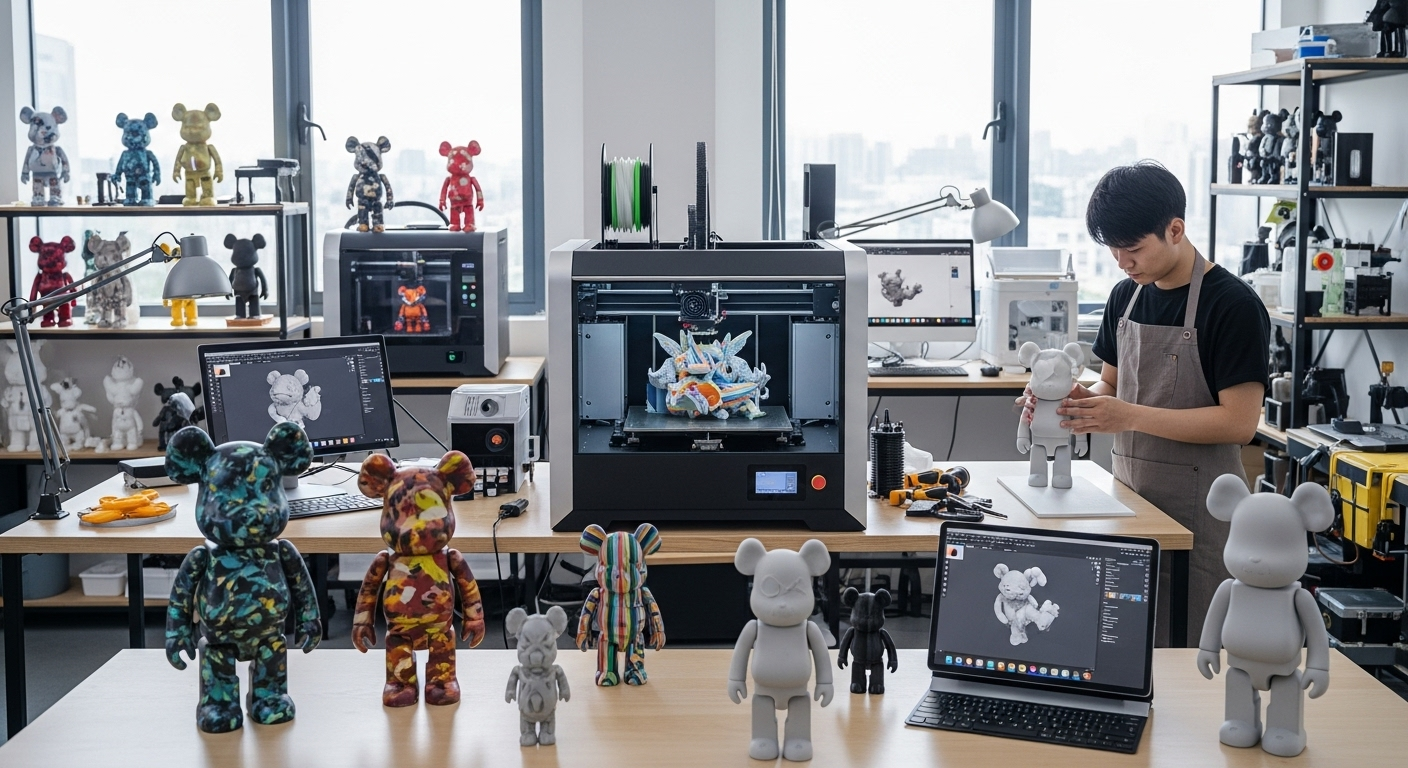
The art toy scene in Singapore matured quickly between 2020 and 2025, driven by a stronger collector base, improved local fabrication and the arrival of AI-assisted design tools. Whether you’re a designer producing a 50-piece limited run or an artist prototyping a new character, understanding the available technologies and finishing workflows is essential. This guide breaks down the best approaches and what to look for in a reliable 3D partner in Singapore — with practical tips on full-color processes, high-detail SLA resin finishes and how AI-assisted sculpting changes the workflow.
Singapore combines fast turnarounds, strict quality control, and a growing ecosystem of boutique finishing houses and industrial prototyping labs. Its logistics links to regional factories in Malaysia, Vietnam and Thailand also make it ideal for small-batch manufacturing that can scale. Local shops often provide value beyond printing — color matching, hand painting, and secure small-run packaging — which suits collectible art toys where presentation is as important as fidelity.
Production choices depend on finish, color needs, and run size:
Full-color 3D printing: For toys where color is integral to the sculpt, full-color methods (voxel-based PolyJet alternatives, binder jetting with post-color infiltration, and advanced CMYK powder processes) produce direct, multi-hued prints with minimal painting. These are ideal for prototypes and limited runs with complex textures. Learn more about options for full-color 3D printing.
SLA and high-resolution resin: Stereolithography (SLA) and digital light processing (DLP) produce the finest surface detail and are the go-to for sculpt fidelity. SLA parts take paint and primer well, which is why many premium art toys are printed in resin then finished by hand.
SLS and MJF (nylon): These are durable for functional parts or hollow-armature cores. They’re not typically full-color, so plan for painting or external color application.
Injection molding (short runs): For larger runs, short-run tooling and low-volume injection molds remain the most cost-effective once volumes exceed the hundreds.
AI tools have moved from idea generation to actionable 3D workflows. In 2025, generative models and mesh-optimizers can:
This means faster prototyping and more affordable iteration cycles. However, AI outputs still benefit from a human artistic eye for silhouette, aesthetics and collector appeal. If you’re using AI-assisted sculpting, partner with a supplier that supports format flexibility (OBJ/GLB/ZBrush) and offers pre-print checks.
Read up on vendors that offer integrated tooling for AI workflows like AI-assisted sculpting to speed up iteration.
Prioritize these criteria:
Search specifically for a trusted 3d printing service singapore partner that can demonstrate toy-specific experience and clear post-processing workflows.
A printed figure is only halfway to a shelf-ready art toy. Finishing steps that elevate value:
Many shops now offer modular finishing packages; request sample kits to evaluate finish quality before committing to a run.
Explore providers who specialise in SLA resin finishes and bespoke painting for collectibles.
Typical ranges (2025 market averages):
Lead times have shortened with local production: expect 3–14 days for prototypes and 2–6 weeks for finished short runs, depending on complexity and finishing queue.
If your project involves artistic direction, consider studios that also consult on presentation and packaging to protect collector value. Many providers will collaborate in pre-production for a fee to ensure your sculpt and colorways read correctly in physical form. For design-led projects, link your brief to an expert partner that handles both the sculpt and the finishing stages and has credibility in the art toy community for delivering consistent batches.
Choosing the right local partner in 2025 is more than picking a printer; it’s about aligning sculpt fidelity, color workflow and finishing expertise to the expectations of collectors. For creators who prioritize full-color outputs, high-detail SLA finishes and integrated AI workflows, selecting a studio that demonstrates toy-specific experience and transparent processes will deliver the consistent quality that turns a printed piece into a collectible.
For deeper guidance on specific workflows and finishing packages, consult a specialist studio with a proven toy portfolio and modular production options.


