

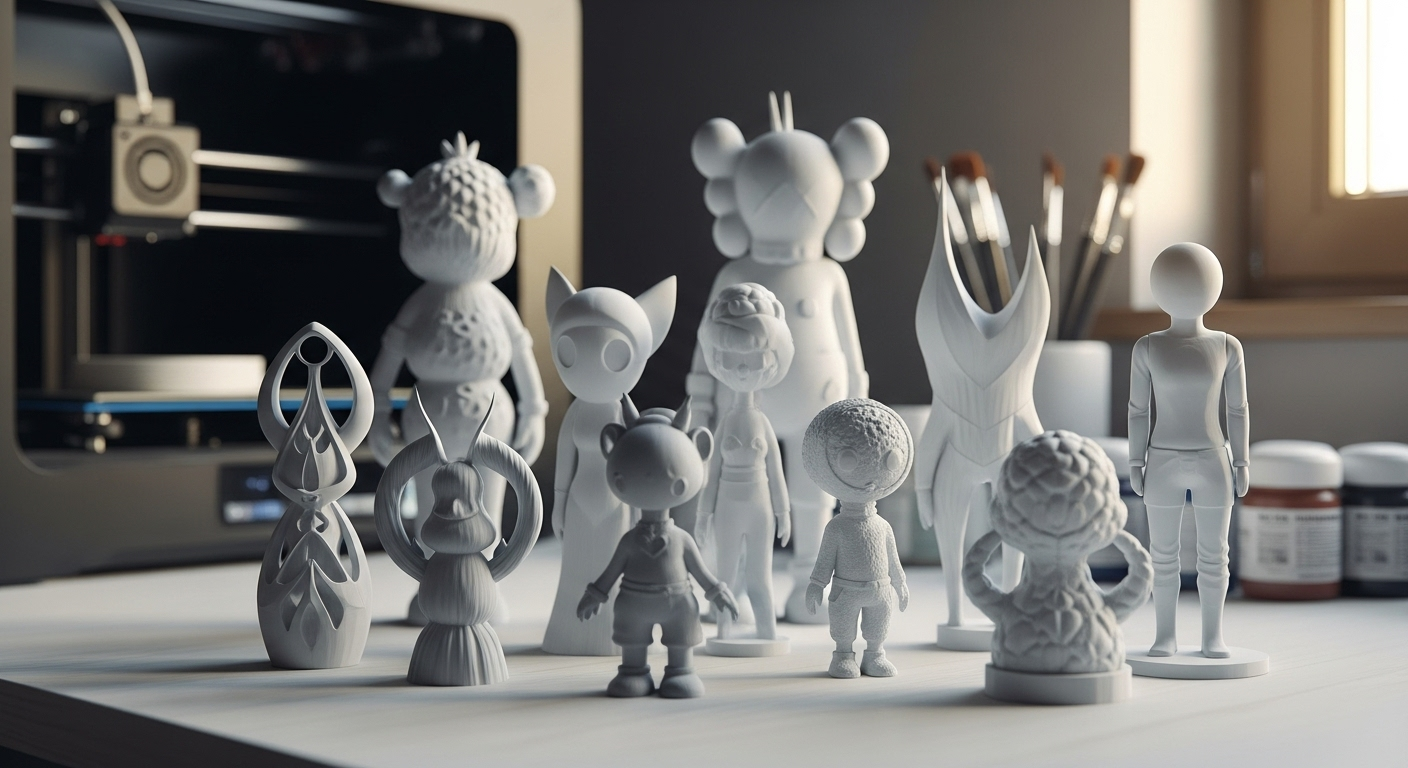
The art toy scene has evolved from niche designer figurines to a vibrant market where limited runs, artist collabs, and bespoke collectibles thrive. For independent designers and small studios in Singapore, partnering with a reliable 3d printing service singapore can turn digital concepts into paintable, display-ready art toys quickly and affordably. In 2025, rapid prototyping technologies, advanced materials, and streamlined local production mean artists can iterate faster, hit limited-release windows, and control finish quality for premium collector appeal.
3D printing is uniquely suited to art toys because it supports complexity, customization, and short runs without the prohibitive tooling costs of injection molding. Key advantages include:
These strengths make 3D printing the default production path for many designer figurine projects before any transition to mass production.
Not all 3D printing is the same. Choosing the right technology from a 3d printing service singapore affects surface finish, paint adhesion, and durability.
SLA / DLP (Photopolymer Resin): Best for ultra-smooth, highly detailed figurines. Resins sand and prime well, giving an excellent canvas for painting. Choose engineering or durable resins for functional parts.
SLS (Nylon): Powder-based nylon prints are robust and good for slightly textured, durable toys. Nylon takes traditional primers but may require more surface prep for a perfectly smooth paint finish.
FDM (Fused Deposition Modeling): Good for quick mockups and large basic forms. FDM parts often require more smoothing and filler work to achieve a collector-grade finish.
Full-color binder jetting: Useful for color prototypes or display pieces, but paintability is limited compared to primable resins.
For high-end art toys destined to be hand-painted, SLA/DLP resins remain the most popular choice among designers using local service bureaus in Singapore.
Collectors expect crisp detail, uniform seams, and a paint surface that holds detail. Here’s what to request from your 3d printing service singapore:
Finish options to discuss:
Successful prints start with proper file preparation. When preparing models for a 3d printing service singapore, follow these practical guidelines:
Export: Provide watertight STL or OBJ files with layers cleaned and normals corrected. Many Singapore service providers offer file checks and minor repairs as part of their workflow.
Turning a print into a frame-worthy art toy is where the craft truly shows. Follow this typical workflow for paintable designer figurines:
Local 3D printing studios in Singapore increasingly offer integrated finishing services — sanding, priming, and even airbrushing — which can be a huge time-saver for designers lacking studio space or equipment.
By 2025, Singapore’s compact geography and mature maker ecosystem make it an attractive production hub for designers who need speed without sacrificing quality:
If your release cadence depends on pop-up shows, gallery drops, or regional toy fairs, these local efficiencies let you respond to market demand swiftly.
3D printing shines for prototyping and short runs (tens to a few hundred units). Costs vary by material, finish and labor, but plan for higher per-unit costs than mass-production. Key considerations:
A smart production strategy uses 3D printing for design validation and initial runs, then scales with molding once sales forecasts justify tooling investment.
Sustainability and personalization are dominant trends shaping the art toy market:
Designers who embrace responsible material choices and flexible production gain both collector trust and long-term resilience.
Working with a quality 3d printing service singapore gives designers powerful control over the entire art toy lifecycle: from high-detail prototyping to finished, paintable figurines with fast local turnaround. By choosing the right printing technology, preparing files correctly, and investing in professional post-processing, you can deliver collector-grade pieces that stand out in a competitive market. In 2025, local speed, advanced materials, and integrated finishing services make Singapore an excellent base for producing limited-edition art toys that combine artistic vision with production practicality.


